

Olympia:
(360) 489-1804
Sequim:
(360) 477-4507
Olympia:
(360) 489-1804
Sequim:
(360) 477-4507
Gold has been valued for thousands of years, but modern counterfeit technology has made
fake gold more convincing than ever. From plated jewelry to tungsten-filled bars, many
counterfeit items can fool inexperienced buyers with ease.
Because of this, knowing how to tell if gold is real has become increasingly important for
collectors, investors, and anyone selling jewelry or bullion. While some home methods can
help identify obvious fakes, professional precious metal dealers rely on multiple testing
methods together for accurate results.
In this guide, we’ll explain the most common gold testing methods, including visual
inspection, weight testing, ping testing, acid testing, and professional XRF analysis.

As gold prices rise, counterfeit operations become more profitable. Fake gold jewelry,
imitation bullion, and plated coins are now commonly found through online marketplaces,
estate sales, pawn transactions, and even private trades.
Some counterfeit pieces are easy to spot, while others are sophisticated enough to imitate:
● proper color
● realistic weight
● official-looking stamps
● authentic packaging
Modern counterfeiters sometimes use tungsten because its density is similar to gold,
making visual inspection alone unreliable.
This is why professional gold buyers rarely rely on only one testing method.
Visual inspection is usually the first step when determining whether gold is real.
Look for Hallmarks and Purity Stamps
Authentic gold jewelry and bullion often include purity markings such as:
● 10K
● 14K
● 18K
● 24K
● 585
● 750
● 999
These markings indicate the purity of the gold content.
However, fake items frequently copy these stamps, so markings alone should never be
considered proof.


Common warning signs include:
● discoloration around edges
● flaking or peeling surfaces
● unusually bright coloring
● poor engraving quality
● incorrect coin details
● misspelled text
● rough seams or casting bubbles
Professional coin dealers also examine edge details, strike quality, and wear patterns.
Some counterfeit items look extremely convincing. Modern fakes can closely imitate:
● color
● luster
● design
● stamps
● packaging
That’s why professionals combine visual inspection with more objective testing methods.

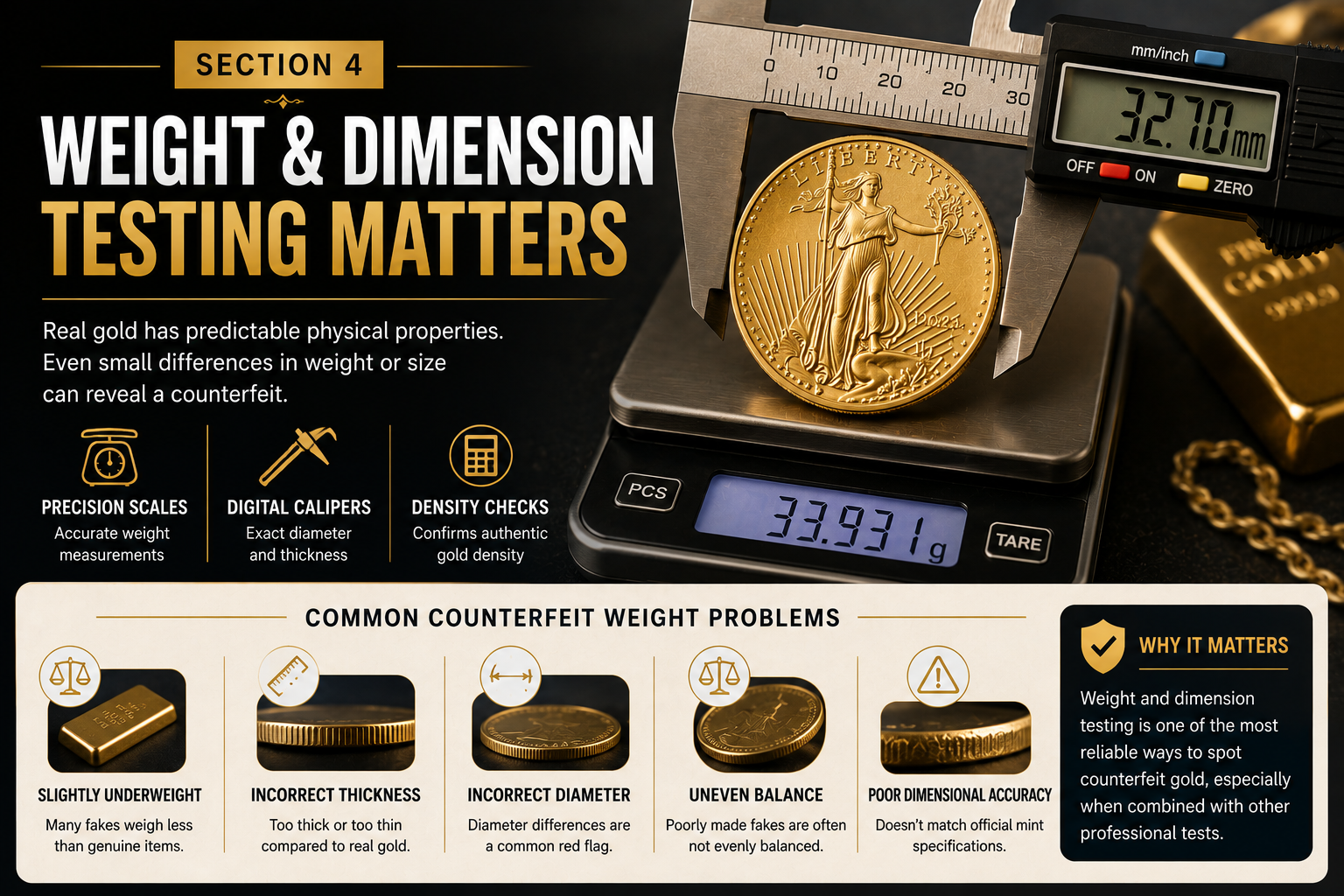
Real gold has highly predictable physical properties.
Real Gold Has Consistent Density
Pure gold is extremely dense. Genuine bullion coins and bars are manufactured to exact
specifications involving:
● weight
● diameter
● thickness
● density
Even small differences can reveal a counterfeit.
Fake gold items are often:
● slightly underweight
● too thick
● incorrectly sized
● unevenly balanced
Professional dealers use:
● precision scales
● digital calipers
● density calculations
to compare items against official mint specifications.


Weight testing is especially useful because many fake items fail dimensional accuracy even
if they appear visually convincing.
However, advanced counterfeits can sometimes mimic correct weight, which is why
additional testing is important.
Weight testing is one of the best first checks because real gold has a predictable weight for its size, but it should not be treated as the final answer. A piece that weighs incorrectly may be hollow, plated, filled, or made with cheaper metals, while a piece that weighs correctly may still need more testing to confirm purity. In part two, we’ll look at the next layer of verification: how professional testing methods help confirm what weight and visual inspection can only suggest.