

Olympia:
(360) 489-1804
Sequim:
(360) 477-4507
Olympia:
(360) 489-1804
Sequim:
(360) 477-4507
Jewelry markings—often called stamps or hallmarks—are small details that carry important information about a piece’s metal content, origin, and sometimes its maker. While these marks are easy to overlook, they are often the first clue in determining whether jewelry is solid gold, sterling silver, plated, or something else entirely.
This guide explains the most commonly searched jewelry markings, including 925 silver, 750 gold, 585 gold, and maker’s marks, and how to interpret them correctly.
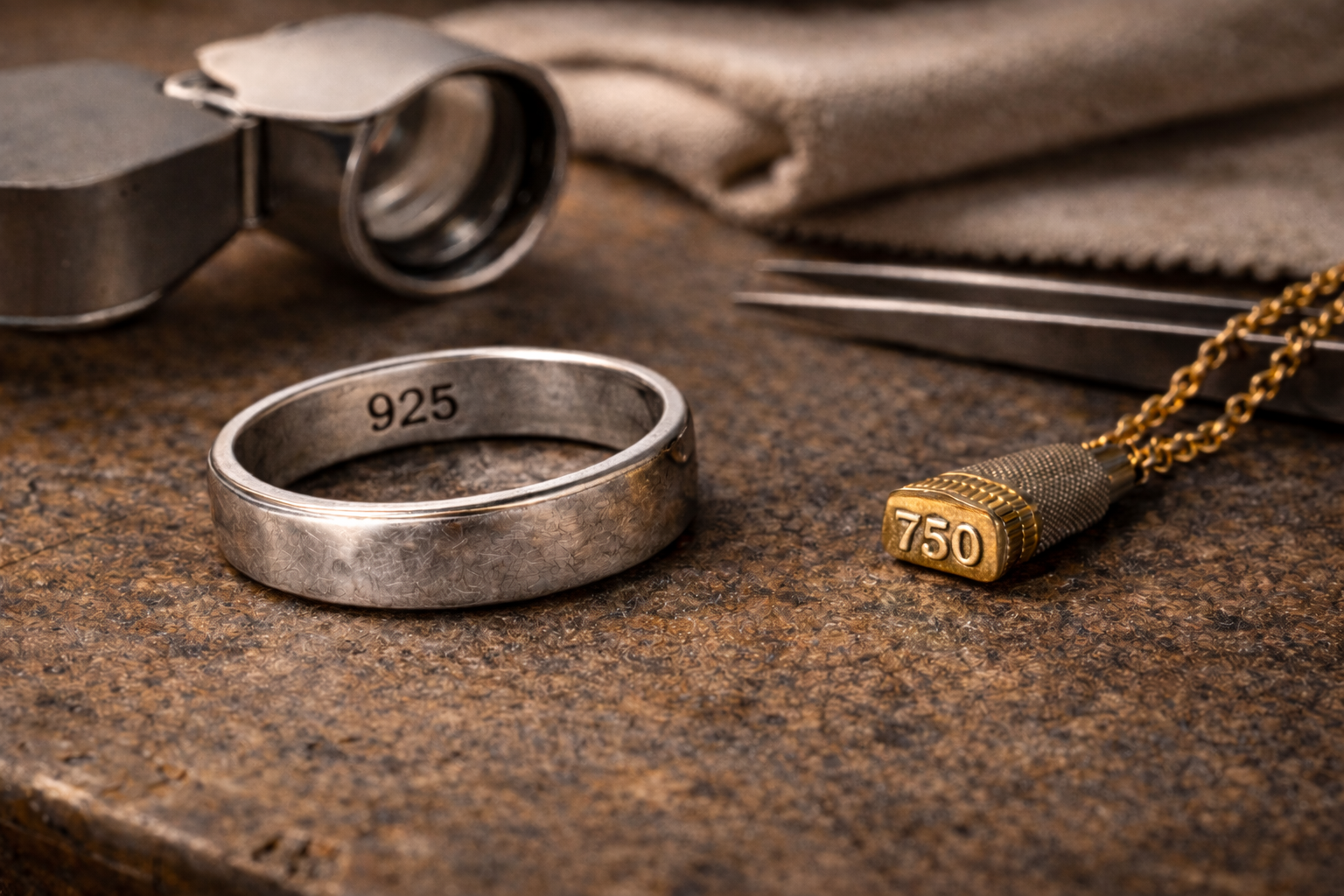
The number 925 stamped on jewelry indicates that the piece is made of sterling silver, the standard alloy used for most fine silver jewelry.
Sterling silver consists of:
92.5% pure silver
7.5% alloy metals, typically copper
Pure silver is too soft for everyday wear, so it is alloyed to improve strength and durability while maintaining its silver appearance.
A 925 stamp confirms the intended metal content, not the overall quality or value of the piece. Factors such as weight, craftsmanship, brand, and condition still matter. While a 925 stamp is a strong indicator of sterling silver, it does not, by itself, guarantee authenticity.
Silver jewelry often contains multiple markings, which together provide a clearer picture of what the piece is and where it came from.
You may encounter silver jewelry stamped with:
925 or .925
S925
Sterling
Ster
These markings all indicate sterling silver, though the format can vary based on manufacturer, country of origin, or time period.
In addition to purity stamps, silver jewelry may include:
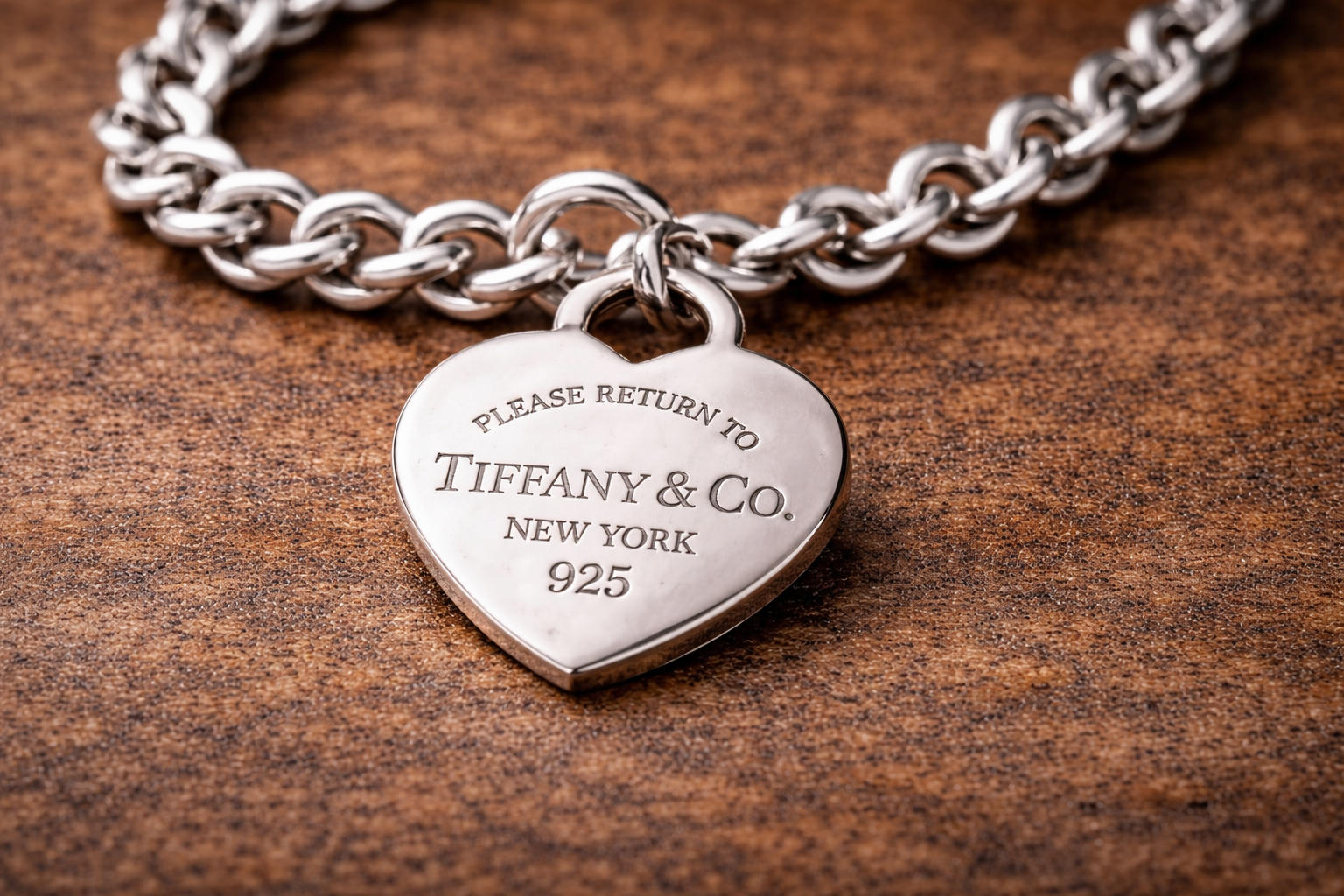
A maker’s mark or logo
A country-of-origin or assay mark, especially on European pieces
Decorative or symbolic stamps used by specific manufacturers
When present together, these marks help identify metal purity, origin, and production source, which is particularly useful for vintage and estate jewelry.


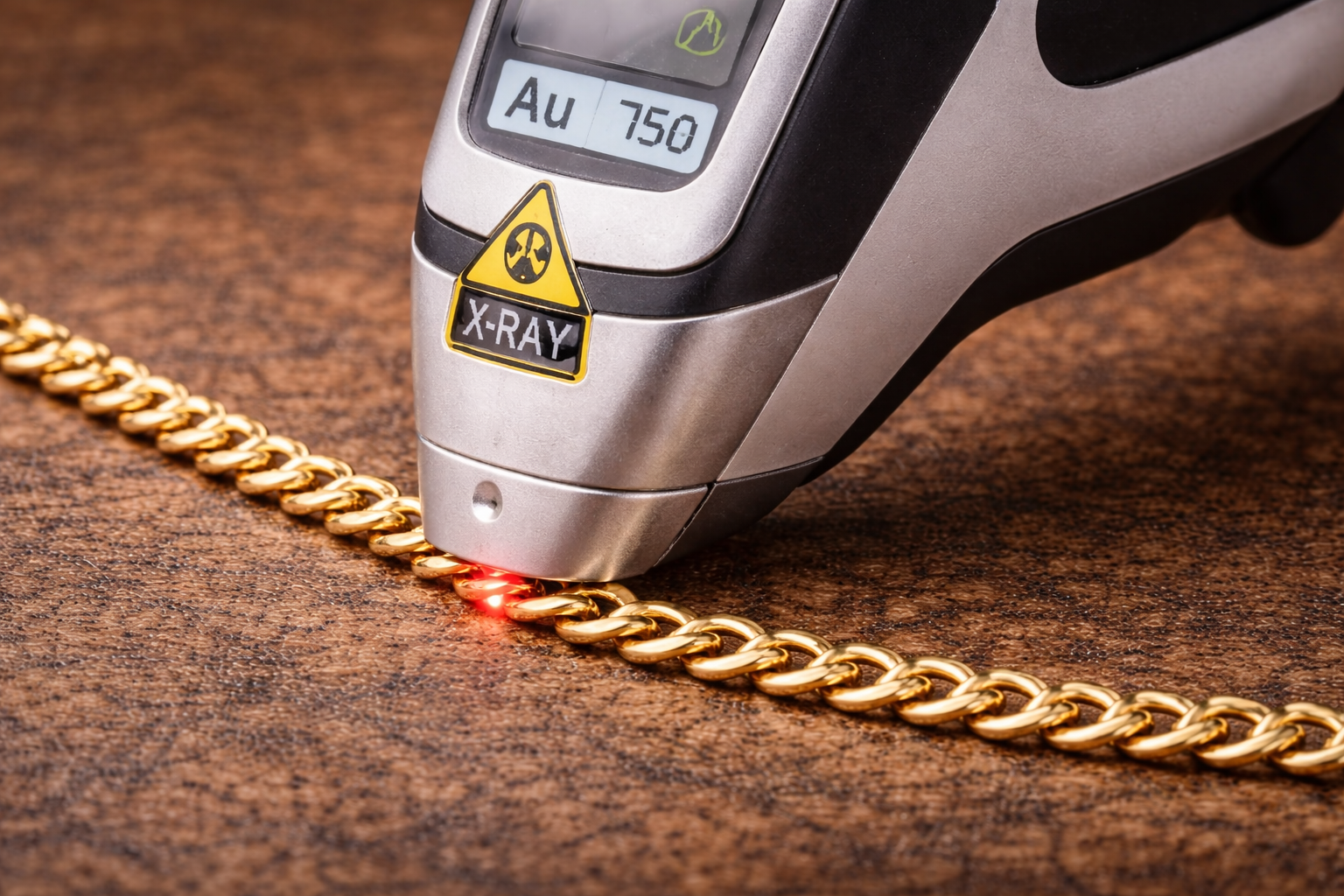
The stamp 750 identifies 18 karat gold, meaning the piece contains a high percentage of pure gold.
75% pure gold
25% alloy metals
This marking is frequently used on European jewelry and higher-end gold pieces.
The gold content represented by 750 may be indicated in different but equivalent ways, including:
750
18K
18KT
Each of these markings denotes the same gold purity, expressed using different labeling conventions.
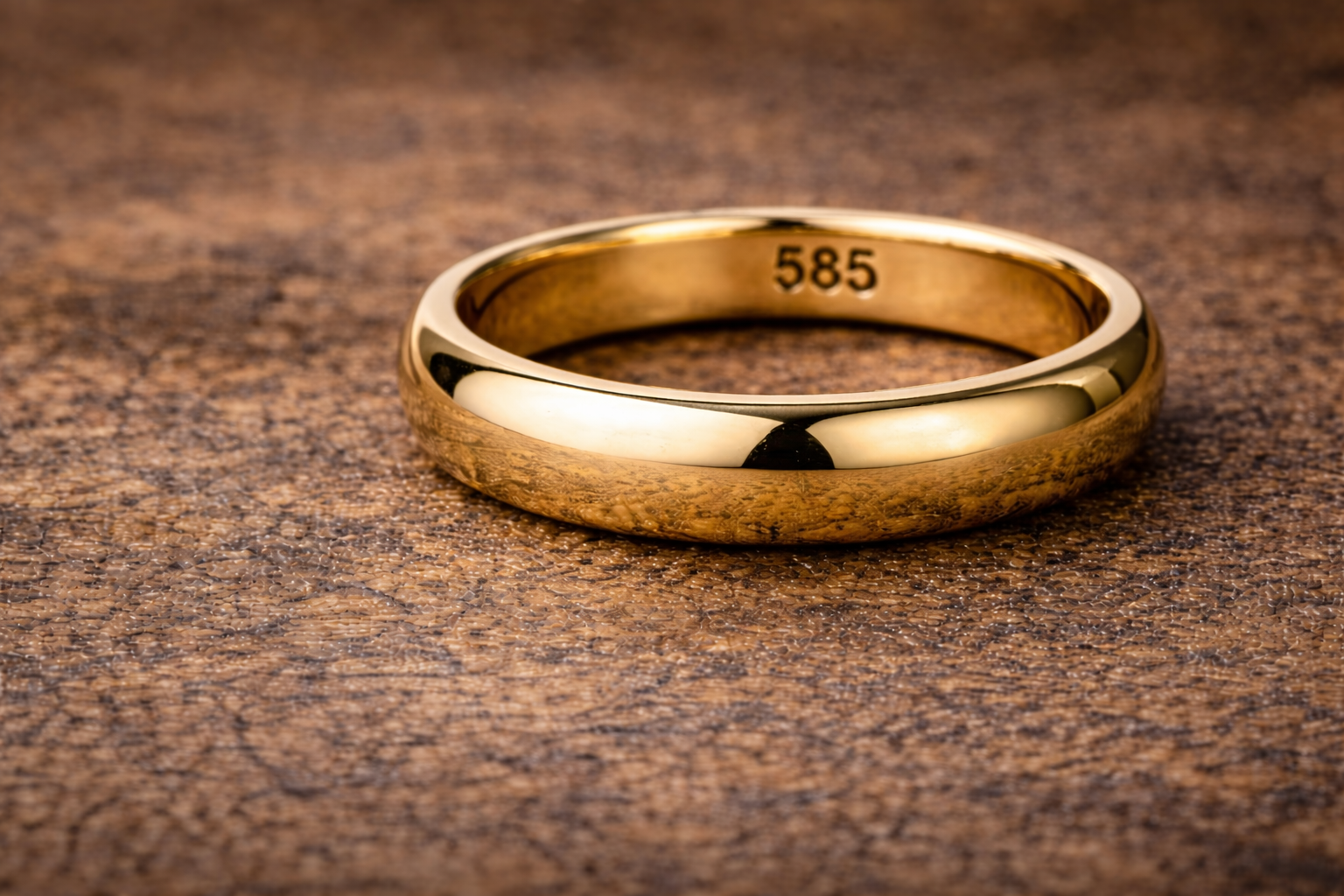
The stamp 585 indicates 14 karat gold, one of the most common gold purities used in jewelry, particularly in the United States.
58.5% pure gold
41.5% alloy metals
This purity offers a balance between durability and gold content, making it popular for rings, chains, and everyday jewelry.
Gold jewelry with this purity may be stamped as:
585
14K
14KT
All of these markings represent the same gold content.

In addition to numeric purity stamps, gold jewelry often includes letter-based markings that describe how the gold is applied.
GF – Gold filled
GP – Gold plated
RGP – Rolled gold plate
K or KT – Karat designation
These markings are critical because gold-filled and gold-plated jewelry contain significantly less gold than solid gold items, even if they look similar at first glance.
A maker’s mark identifies the company or individual who manufactured the jewelry. These marks can take many forms, including:
Initials
Logos
Stylized letters
Abstract symbols
Maker’s marks can help:
Identify the manufacturer or designer
Estimate the age of a piece
Distinguish mass-produced jewelry from higher-quality or collectible items
In some cases, a recognizable maker’s mark can be as important as the metal content itself.
Jewelry stamps help answer several key questions:
What metal is this made from?
How pure is the metal?
Is it solid, filled, or plated?
Was it made by a known manufacturer?
However, stamps can be worn, incomplete, or misleading, and some counterfeit pieces carry false markings.
Jewelry markings such as 925, 750, and 585 provide valuable starting information, but they do not tell the entire story. Weight, construction, testing, and expert evaluation are often necessary to confirm authenticity and determine value.
Unmarked jewelry is not automatically fake, and marked jewelry is not automatically genuine. When in doubt, professional assessment is the most reliable way to know what you have.