


Olympia:
(360) 489-1804
Sequim:
(360) 477-4507
Olympia:
(360) 489-1804
Sequim:
(360) 477-4507
Coin collectors and casual sellers alike often hear the phrase “error coins,” but what most people are really searching for are mint-made coin errors—coins that were struck incorrectly during the manufacturing process at the U.S. Mint.
These mistakes can range from subtle die issues to dramatic misprints, and while not every coin error is valuable, some mistakes can significantly increase a coin’s worth.
This guide explains what mint-made errors are, how they happen, and which coin mistakes are actually worth money.

A mint-made coin error is a mistake that occurs during the official minting process, not damage that happens after a coin enters circulation.
This distinction is critical.
Scratches, bends, corrosion, or heat damage are not errors—they are post-mint damage and usually reduce value.
True mint errors occur when something goes wrong during:
Die creation
Planchet preparation
Coin striking
Alignment or pressure during minting
Because these mistakes originate at the mint, they are collectible and, in some cases, valuable.
Many people search for misprint pennies, misprint quarters, or mis-stamped coins. While “misprint” isn’t a technical term used by collectors, it’s a useful way to describe visible minting mistakes.
Common examples include:
Off-center strikes
Double strikes
Partial designs
Wrong planchet errors
Die cracks or breaks
These mistakes happen when blanks are misfed, dies shift, or pressure is uneven during striking. Some are subtle; others are immediately obvious.
Misprinted coins can exist across all denominations, but pennies and quarters are most commonly searched due to familiarity and volume.

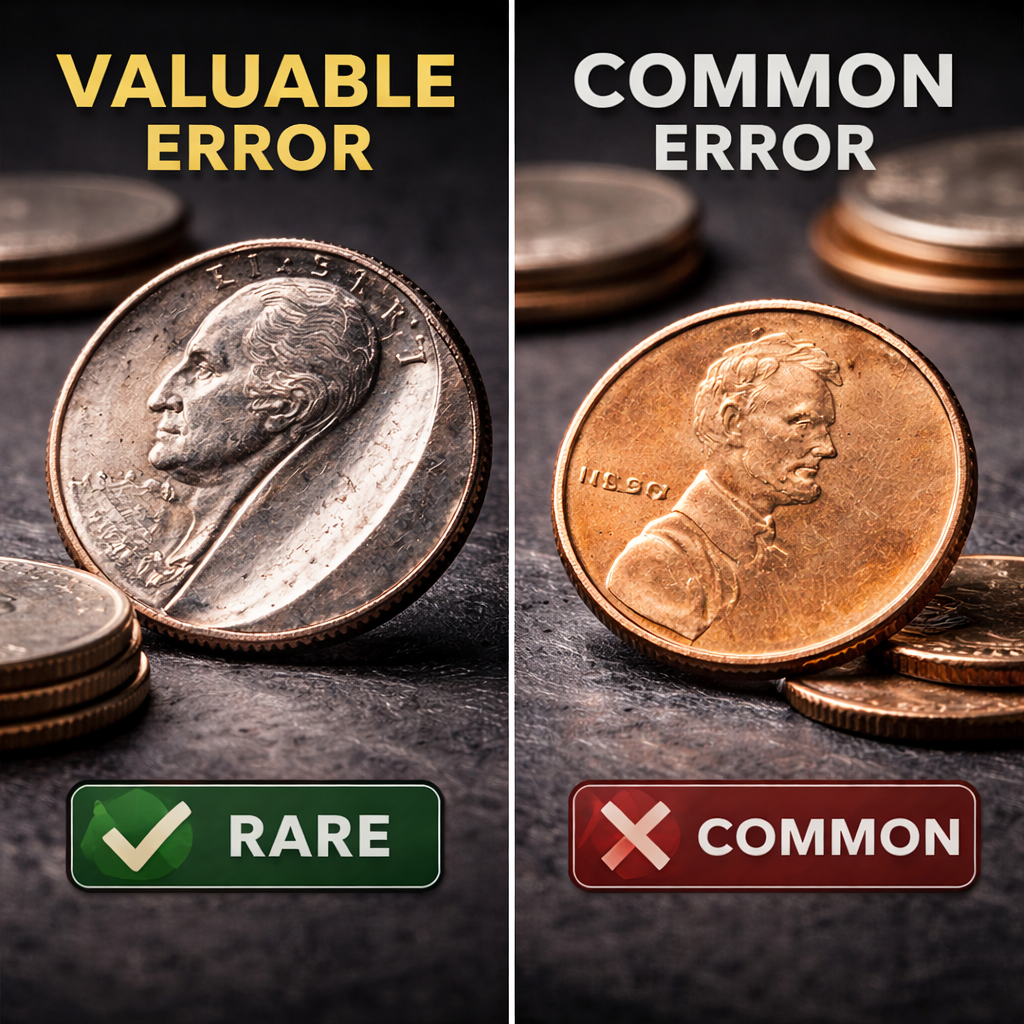
This is the most important question—and the answer is it depends.
Some coin mistakes worth money include:
Major off-center strikes
Dramatic double strikes
Coins struck on the wrong metal
Large die breaks or retained cud errors
However, most coins with small or common errors are not valuable, especially if:
The error is minor
The coin is heavily worn
The mistake is common for that year or mint
Value is driven by rarity, visibility, demand, and condition—not just the presence of a mistake.
This is why two coins with similar errors can have vastly different values.
People often ask about new coin errors or whether modern mint mistakes can be valuable.
The short answer: sometimes.
Modern minting technology has reduced errors overall, but when mistakes occur, they are often well-documented and quickly removed from circulation. This can limit rarity.
That said, rare coin errors still appear—especially dramatic mistakes that escape quality control. When these are authenticated and preserved in good condition, they can be collectible.
Not every modern error is valuable, but dismissing newer coins outright is a mistake.
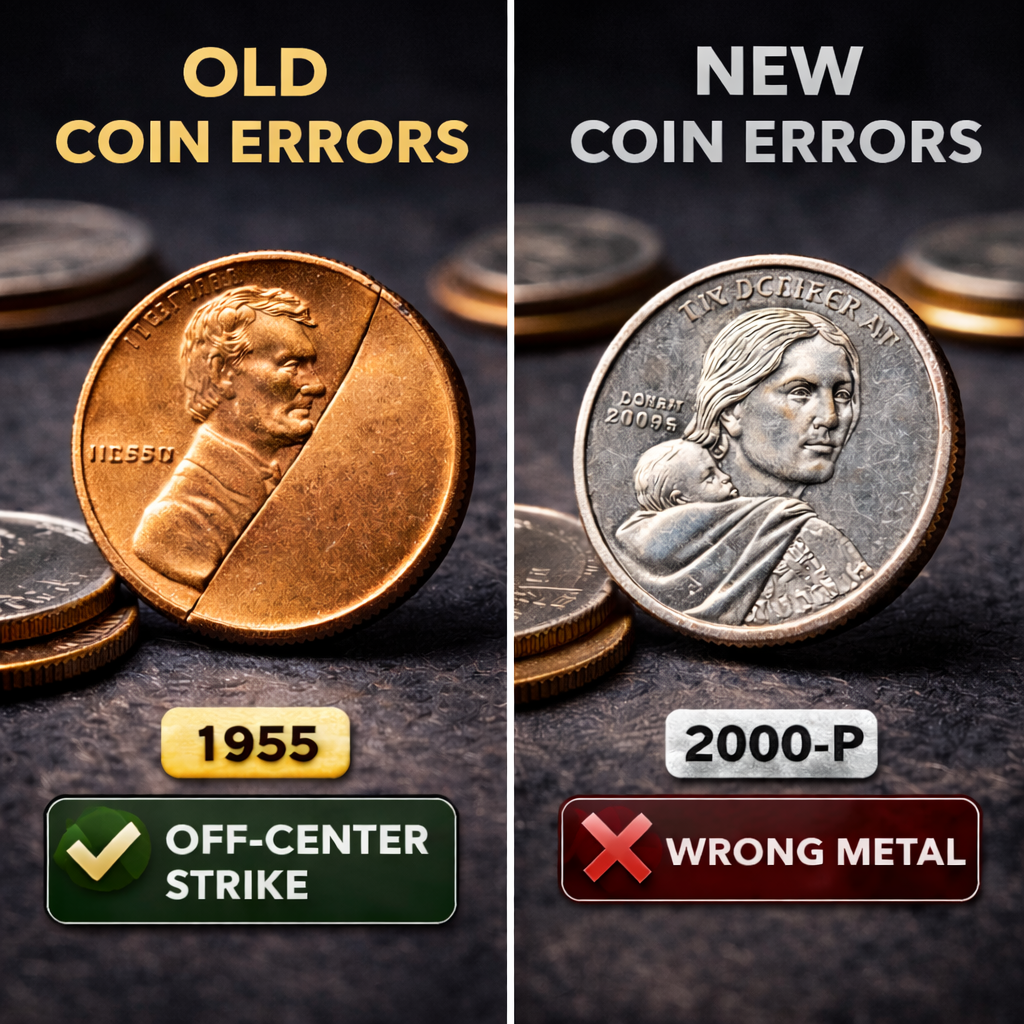

A common point of confusion is the difference between mint coin errors and coin defects.
Collectors look for:
Errors caused by the minting process
Consistent indicators of a known error type
No signs of post-mint damage
Coin defects caused by:
Damage
Alteration
Environmental exposure
generally do not add value and often reduce it.
When in doubt, professional evaluation matters.
If you believe you have a coin with a genuine mint-made error, a proper evaluation can help determine:
Whether the error is authentic
Whether it is common or rare
Whether it has market value
Many people are surprised to learn that while some mistake coins are worth money, most are educational rather than valuable.
Knowing the difference can save time, prevent false expectations, and help you make informed decisions.

Final Thoughts
Mint-made coin errors are fascinating pieces of numismatic history. They show that even highly controlled processes can go wrong—and sometimes those mistakes become collectible.
Understanding the difference between true mint errors and ordinary damage is the first step toward determining value.
If you come across a coin that looks unusual, learning what to look for puts you far ahead of the average searcher.