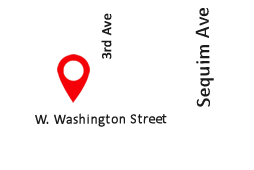


Olympia:
(360) 489-1804
Sequim:
(360) 477-4507
Olympia:
(360) 489-1804
Sequim:
(360) 477-4507
If you’re looking to buy silver, one of the most common questions is whether it’s better to choose historic U.S. silver coins or modern silver rounds. On paper, many of these pieces contain similar amounts of silver. In practice, their value, premiums, and resale potential can differ significantly.
This guide compares Morgan and Peace silver dollars with one-ounce silver rounds, explaining how each is priced, why they trade differently, and which option may make the most sense depending on your goals.
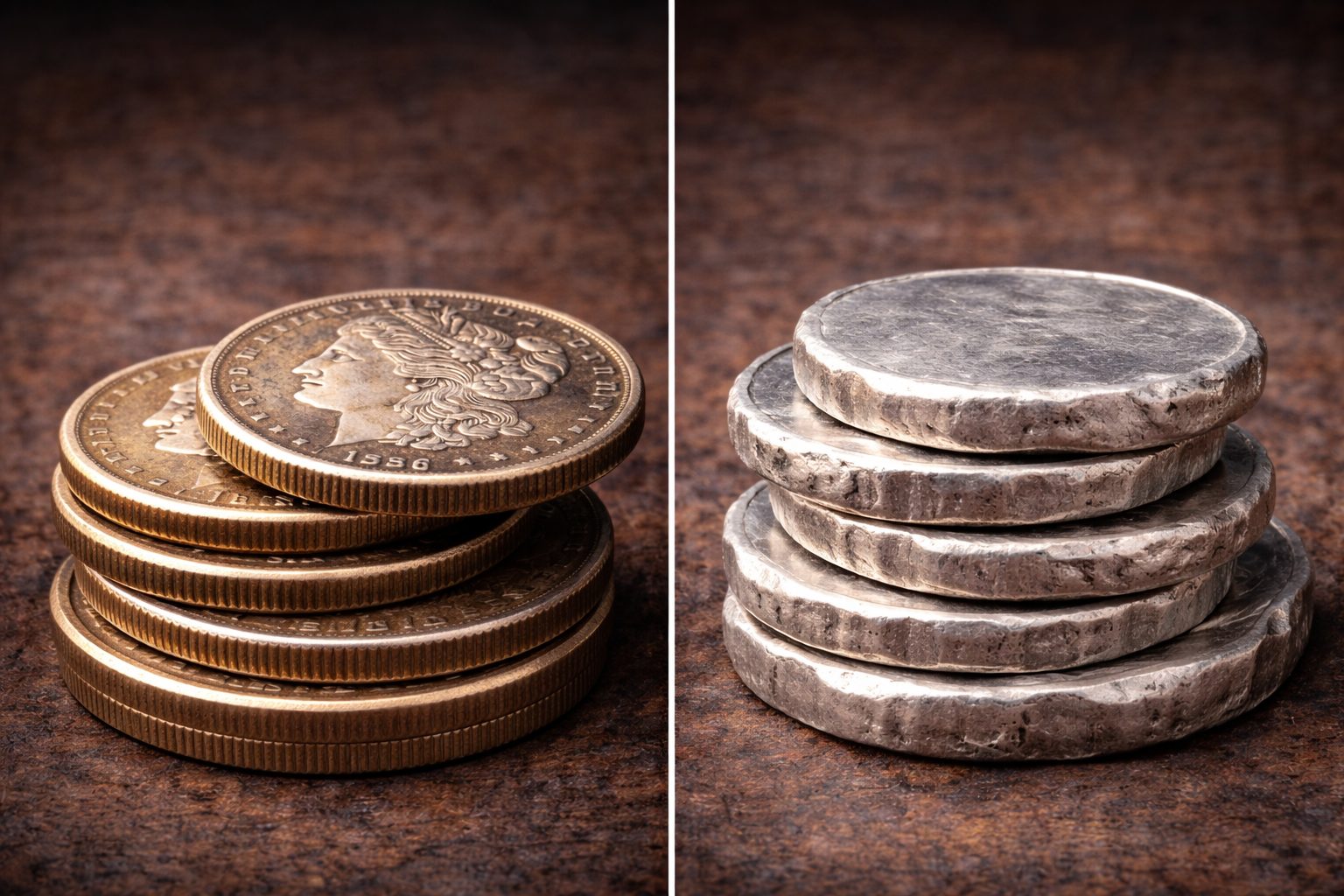
Silver coins and silver rounds may look similar, but they are valued differently.
Silver coins are minted by governments, carry a face value, and are widely recognized. Morgan and Peace dollars fall into this category and often trade above their silver content due to age, scarcity, and demand.
Silver rounds are privately minted bullion pieces. They contain silver but have no face value and often have no collector backing. Their value is primarily tied to the current silver spot price rather than historical or numismatic factors.
For most buyers, the decision comes down to recognition versus efficiency.
Morgan and Peace dollars occupy a space between bullion and collectibles.
Each coin contains approximately 0.773 troy ounces of silver, yet they frequently sell for more than melt value. This is driven by limited supply, historical significance, and ongoing collector demand.
When people check the value of a Morgan dollar today, they often discover that two coins with the same silver content can command very different prices depending on condition and market interest.
Peace dollars share many of the same characteristics, though premiums vary by date and availability.
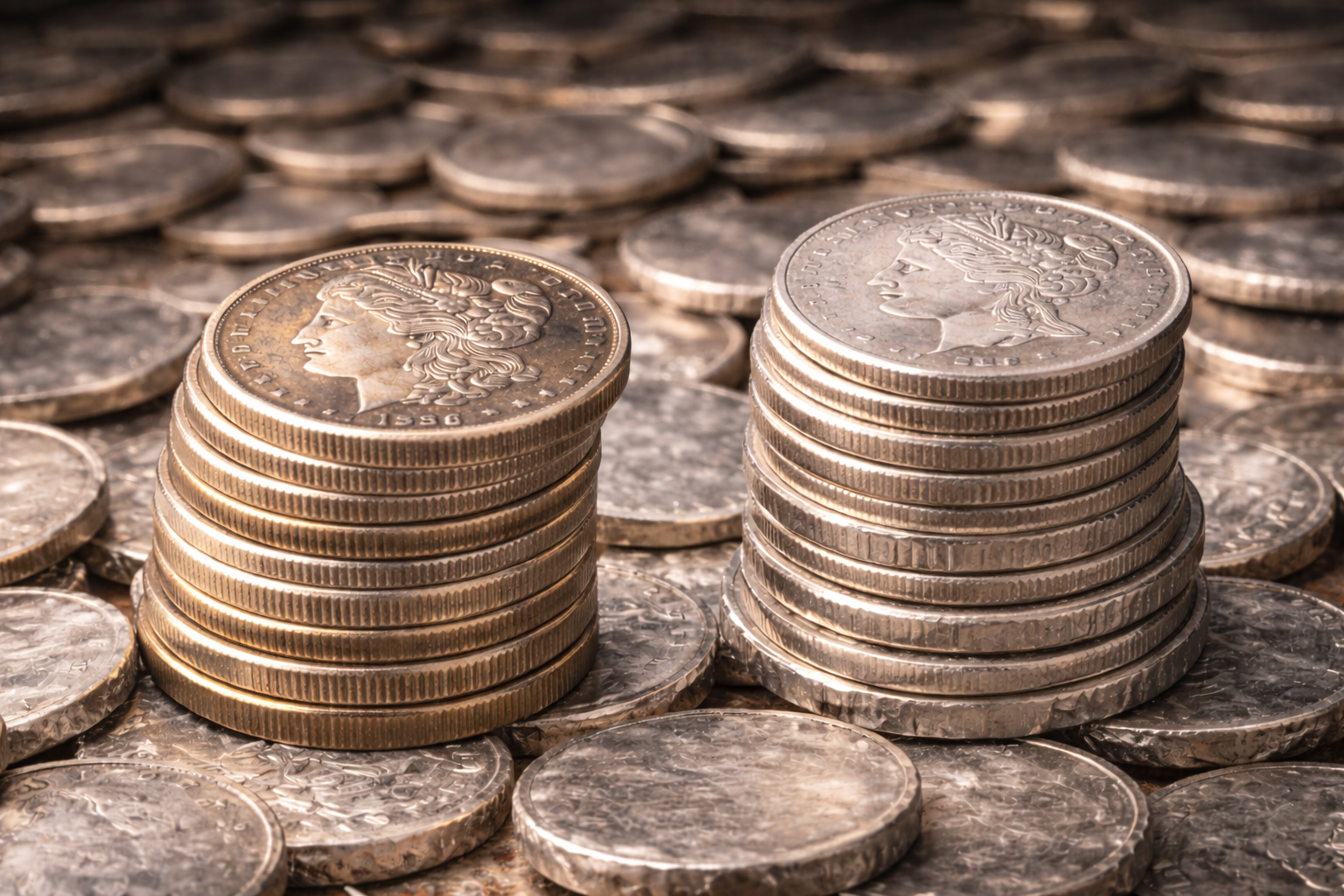

Silver rounds are designed to track the price of silver as directly as possible.
Most rounds:
Contain one ounce of .999 fine silver
Carry lower premiums than government-issued coins
Rise and fall closely with the silver market
Because silver rounds often lack collector demand, they tend to offer more silver per dollar spent. This makes them appealing to buyers focused on bullion exposure rather than history or rarity.
One of the most practical differences between coins and rounds appears when it’s time to sell.
Morgan and Peace dollars benefit from immediate recognition and established collector markets. Well-preserved examples can sell well above melt value, especially when demand is strong.
Silver rounds are also easy to sell, but pricing is usually closer to spot and less influenced by condition or rarity. This results in more predictable pricing, but generally less upside.
Understanding which category your silver falls into helps set realistic expectations before selling.


The better choice depends on your priorities.
Choose Morgan or Peace dollars if you:
Value history and recognizability
Want potential collector premiums
Prefer coins that are widely trusted and understood
Choose silver rounds if you:
Want the most silver for your money
Are focused on bullion value
Prefer pricing that closely tracks silver spot
Neither option is inherently better; they simply serve different purposes.
Whether you’re buying or selling, working with a local silver buyer can offer advantages that online transactions often can’t. In-person evaluations allow for clearer explanations of premiums, condition, and market demand, and eliminate shipping risk and delays.
Local buyers typically purchase both historic silver coins and bullion rounds, but the pricing approach differs depending on what you bring in. Knowing whether your silver carries collector interest or is valued strictly for metal content can make a meaningful difference in the outcome.
Morgan and Peace dollars and silver rounds may contain similar amounts of silver, but they are valued in fundamentally different ways. Coins offer history, recognition, and potential collector premiums, while rounds emphasize efficiency and direct exposure to silver prices.
Understanding these differences helps you make more informed decisions—whether you’re buying silver for the first time or deciding what to sell.