

Olympia:
(360) 489-1804
Sequim:
(360) 477-4507
Olympia:
(360) 489-1804
Sequim:
(360) 477-4507
Understanding the difference between retail price, intrinsic metal value, and secondary market pricing

At American Rare Coin & Gold, one of the most common conversations we have with customers involves the resale value of watches and jewelry.
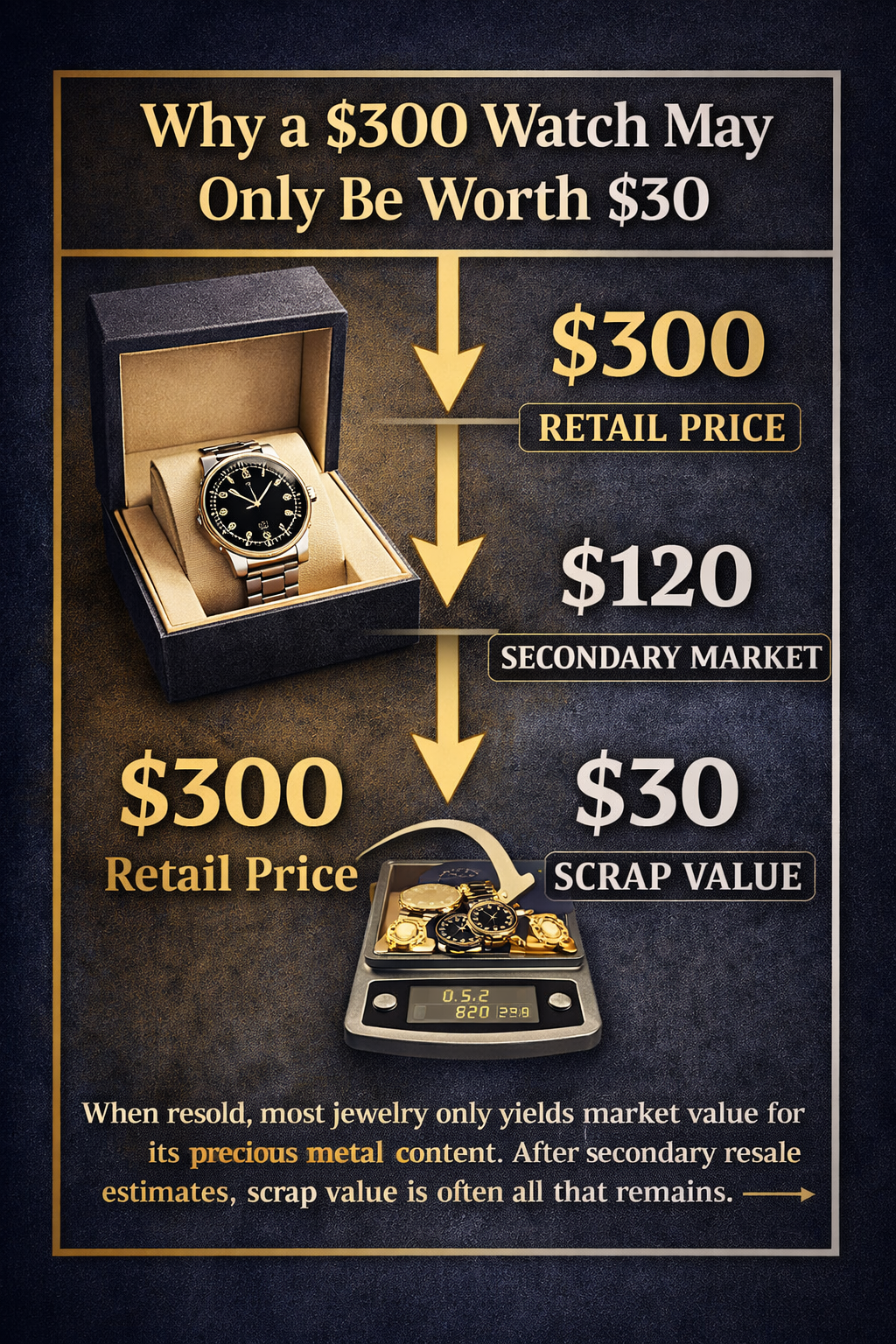
Someone brings in a watch that originally cost $300 at a jewelry store or department store. The watch still works, it looks good, and it was purchased from a legitimate retailer. Naturally, the owner assumes it should still be worth a significant portion of what they paid.
However, after testing and evaluating the piece, the realistic secondary-market value may be closer to $30.
This often comes as a surprise. The difference is not due to damage or deception—it comes from a fundamental distinction between retail pricing, intrinsic metal value, and secondary market demand.
Understanding these three concepts is the key to understanding how jewelry, watches, and scrap metal are valued.
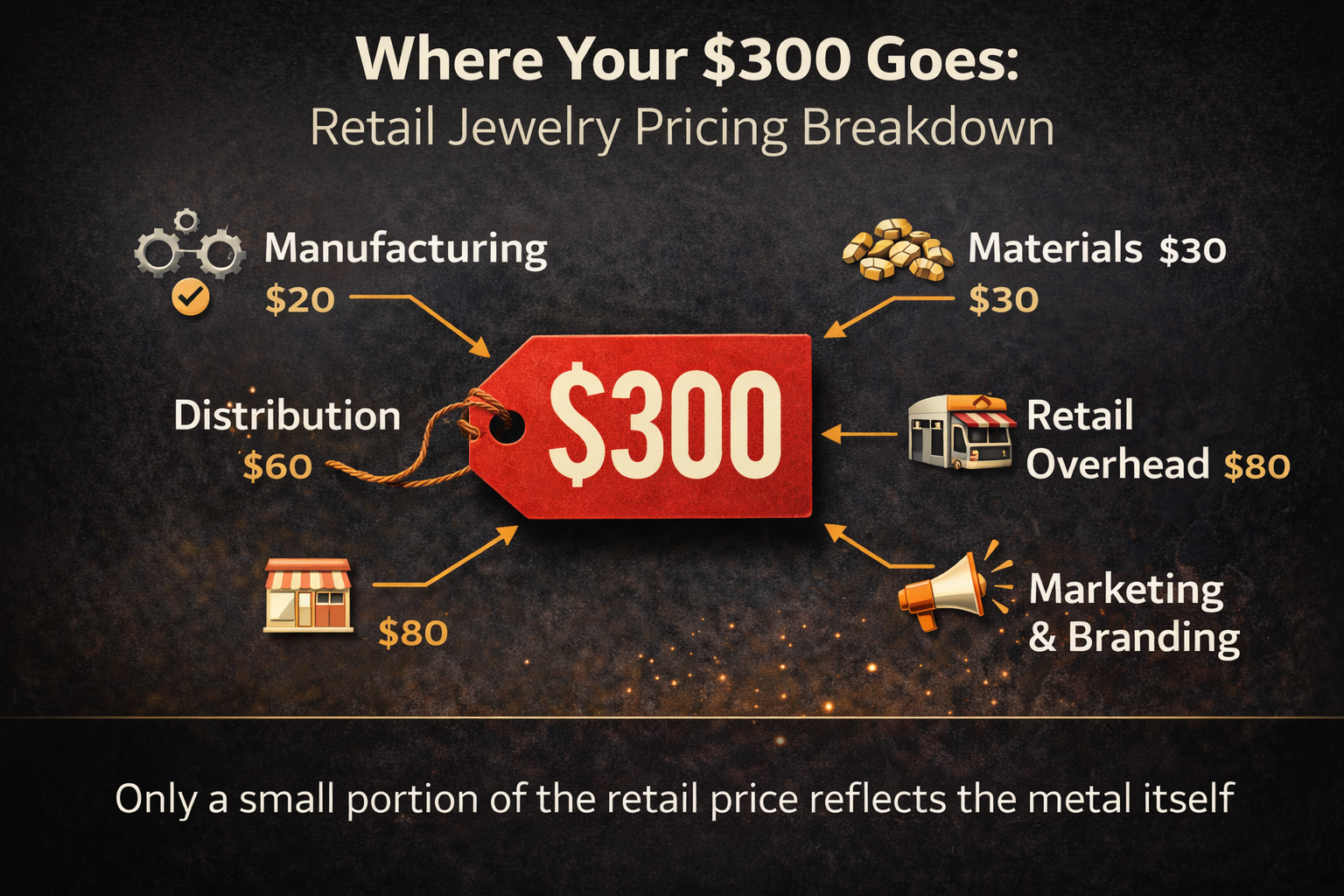
When jewelry or watches are sold at retail, the price reflects far more than the raw materials used to manufacture the item.
Retail pricing typically includes multiple layers of cost, such as:
Brand marketing and advertising
Store overhead including rent, staff, and utilities
Wholesale distribution and shipping
Packaging and presentation
Inventory management and unsold stock
Retail profit margins
In addition to these costs, jewelry products often carry substantial markups between manufacturing and retail sale. In many segments of the fashion jewelry and department-store watch market, retail prices may be five to twenty times the manufacturing cost.
For example, a watch that costs $15–$40 to produce may retail for $200–$400 depending on branding, packaging, and marketing.
Once the item leaves the store, however, it no longer carries that retail pricing structure. When the piece enters the secondary market, buyers evaluate it based on intrinsic metal value and resale demand, not the original purchase price.
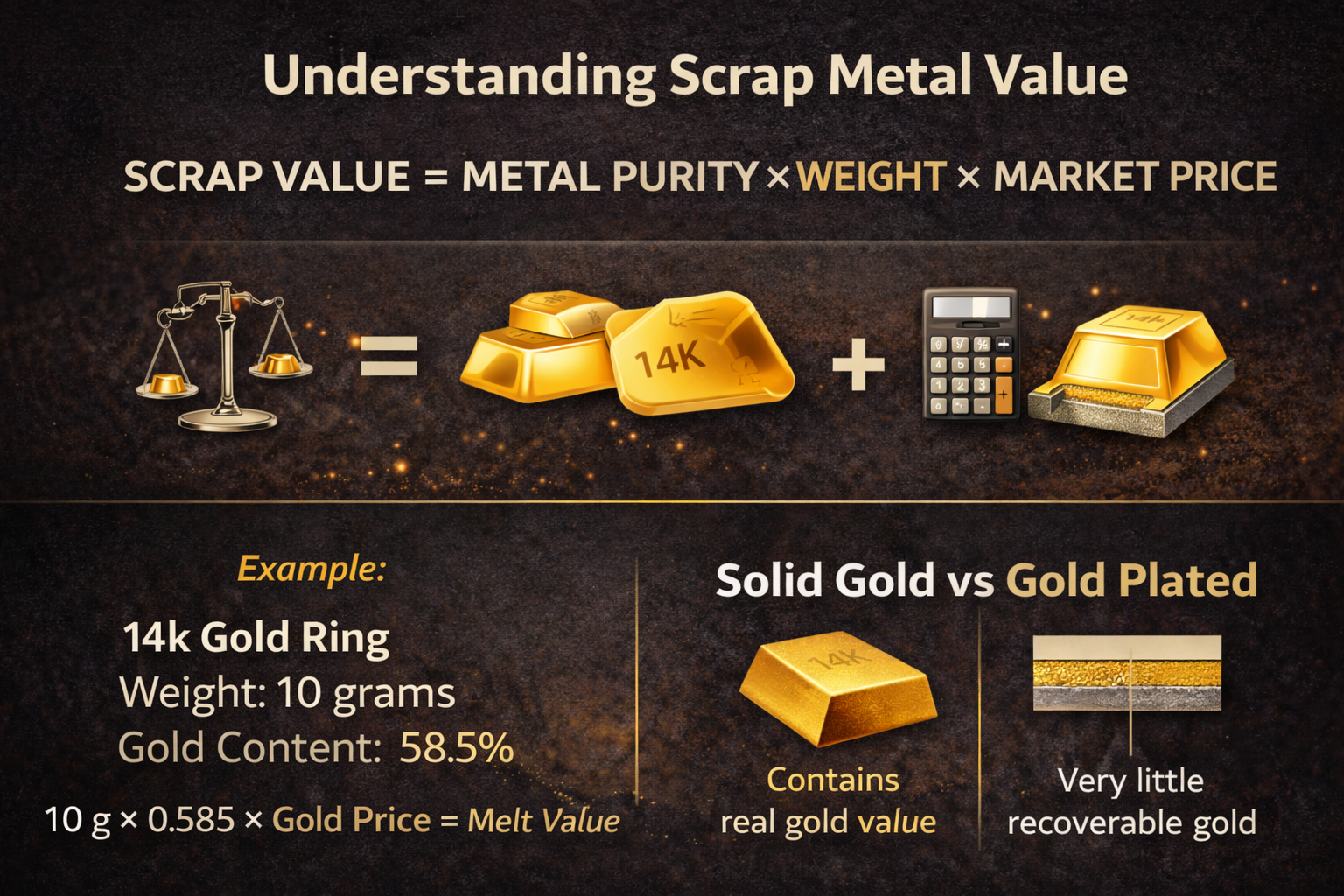
Scrap metal value refers to the intrinsic value of the metal contained within an item.
For precious metals such as gold and silver, this value is determined by three primary factors:
Metal purity (for example 10k, 14k, or 18k gold)
The total weight of the metal
The current market price for that metal
Industrial metals such as stainless steel, brass, aluminum, or copper are typically priced per pound in recycling markets.
If a watch or piece of jewelry contains little precious metal—or if the gold is only plated rather than solid—its intrinsic value will be limited regardless of the original retail price.
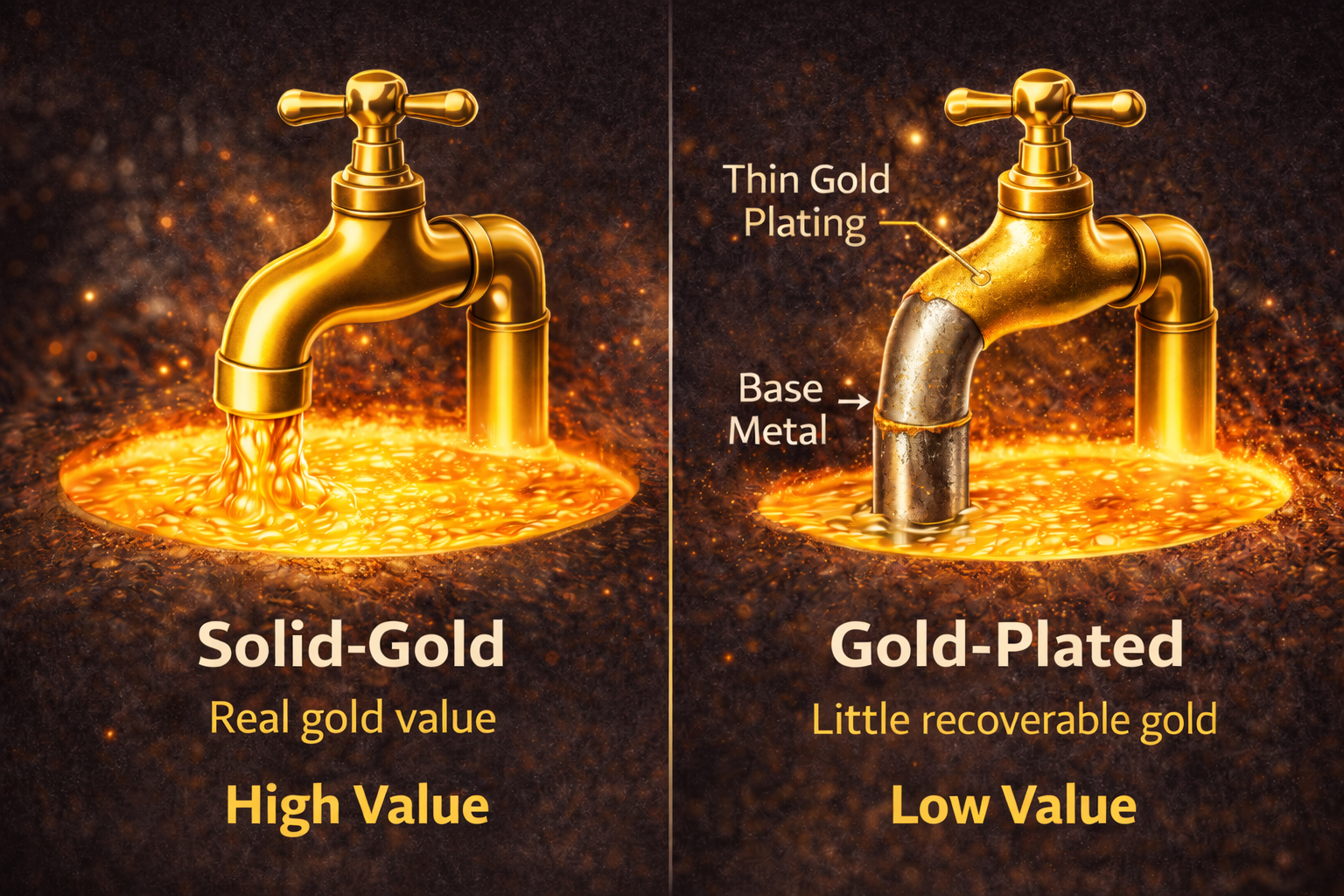
Many watches and jewelry pieces that appear gold are actually gold plated or gold tone rather than solid gold.
Gold plating consists of a very thin layer of gold applied over a base metal such as:
Stainless steel
Brass
Nickel alloys
Because the gold layer is extremely thin, the recoverable gold content is usually negligible. As a result, the item’s scrap value is determined primarily by the underlying metal rather than the appearance of the piece.
This is one of the primary reasons fashion watches that sell for hundreds of dollars at retail may contain very little intrinsic metal value.

Scrap metal prices fluctuate according to global commodity markets.
For precious metals, the primary benchmark is the spot price, which reflects the international trading value of metals such as gold and silver.
However, scrap buyers must also account for additional factors, including:
Refining and processing costs
Testing and verification
Metal loss during melting
Market volatility
Business operating expenses
Because of these factors, the price offered for scrap metal is typically lower than the raw spot price quoted in financial markets.
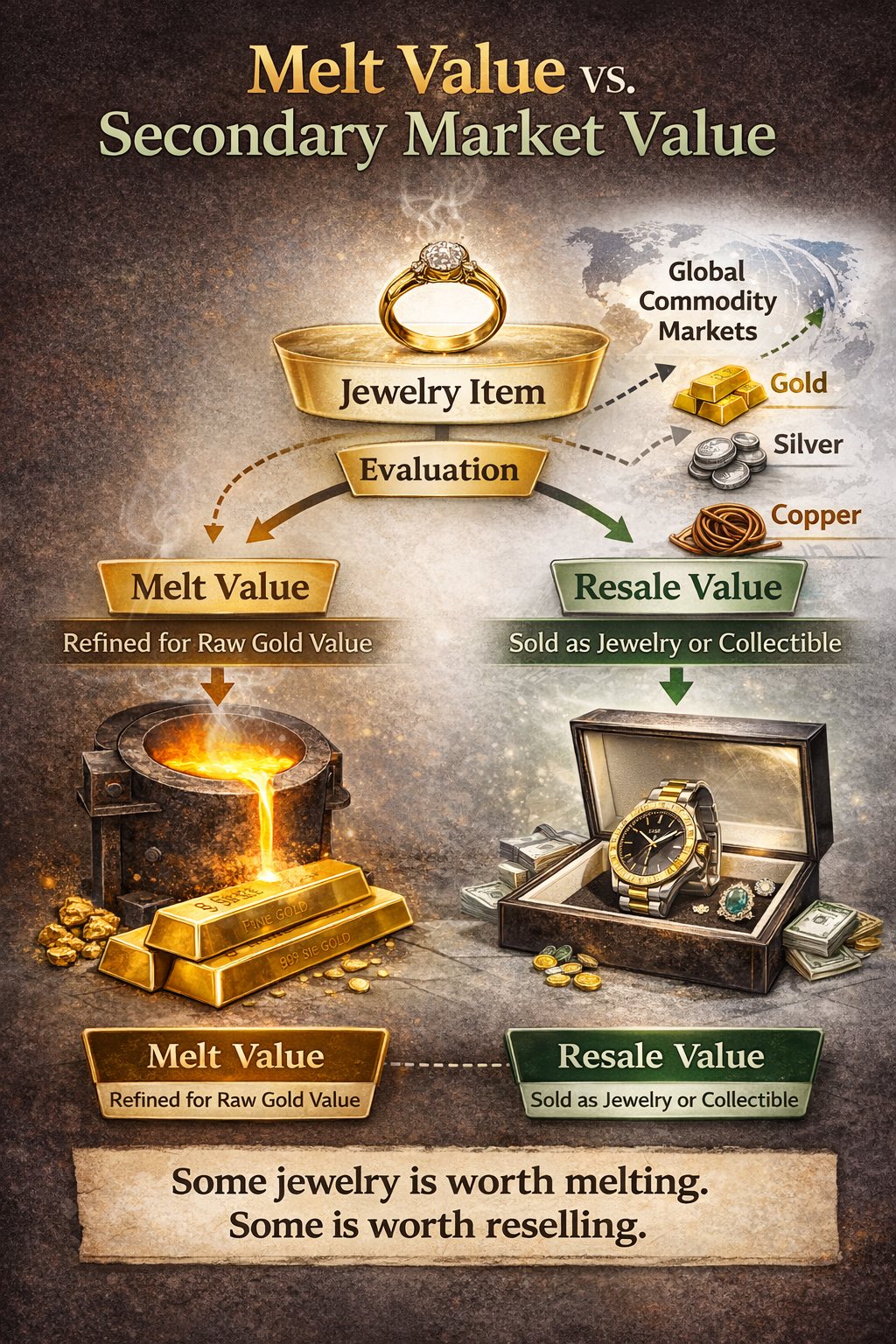
When evaluating jewelry, professionals generally consider two types of value.
Melt value represents the value of the metal itself if the item were refined and returned to raw material.
This calculation depends strictly on:
Metal purity
Weight
Current market price
The original retail price does not affect melt value.
Some jewelry may be worth more than melt value if it has characteristics that collectors or buyers actively seek.
Examples include:
Luxury watch brands such as Rolex or Cartier
Antique or estate jewelry
Designer signed pieces
Jewelry containing significant natural gemstones
Historically important or collectible items
In these cases, value may be influenced by collector demand rather than strictly by metal content.
However, most mass-produced fashion watches and mall jewelry do not carry strong secondary market demand.
When these factors are combined, the price difference becomes easier to understand.
Consider a typical fashion watch with the following characteristics:
Retail price: $300
Materials:
Stainless steel case
Gold-tone plating
Minimal precious metal content
Secondary market demand: Limited
In this situation, the value of the item is determined primarily by:
The scrap value of the steel or base metal components
Limited wholesale resale demand
Because the intrinsic material value is low and collector demand is weak, the secondary-market offer may realistically fall near $30.
This outcome reflects standard market economics rather than a flaw in the item itself.
The secondary market operates very differently from the retail market.
Buyers must evaluate items based on:
Current commodity prices
Refining costs
Market demand
Liquidity and resale potential
Business risk and operating overhead
For this reason, secondary-market pricing is typically closer to wholesale value than consumer retail pricing.
This pricing model is consistent across industries including:
Pawn shops
Precious metal buyers
Estate jewelry dealers
Scrap yards
Antique dealers
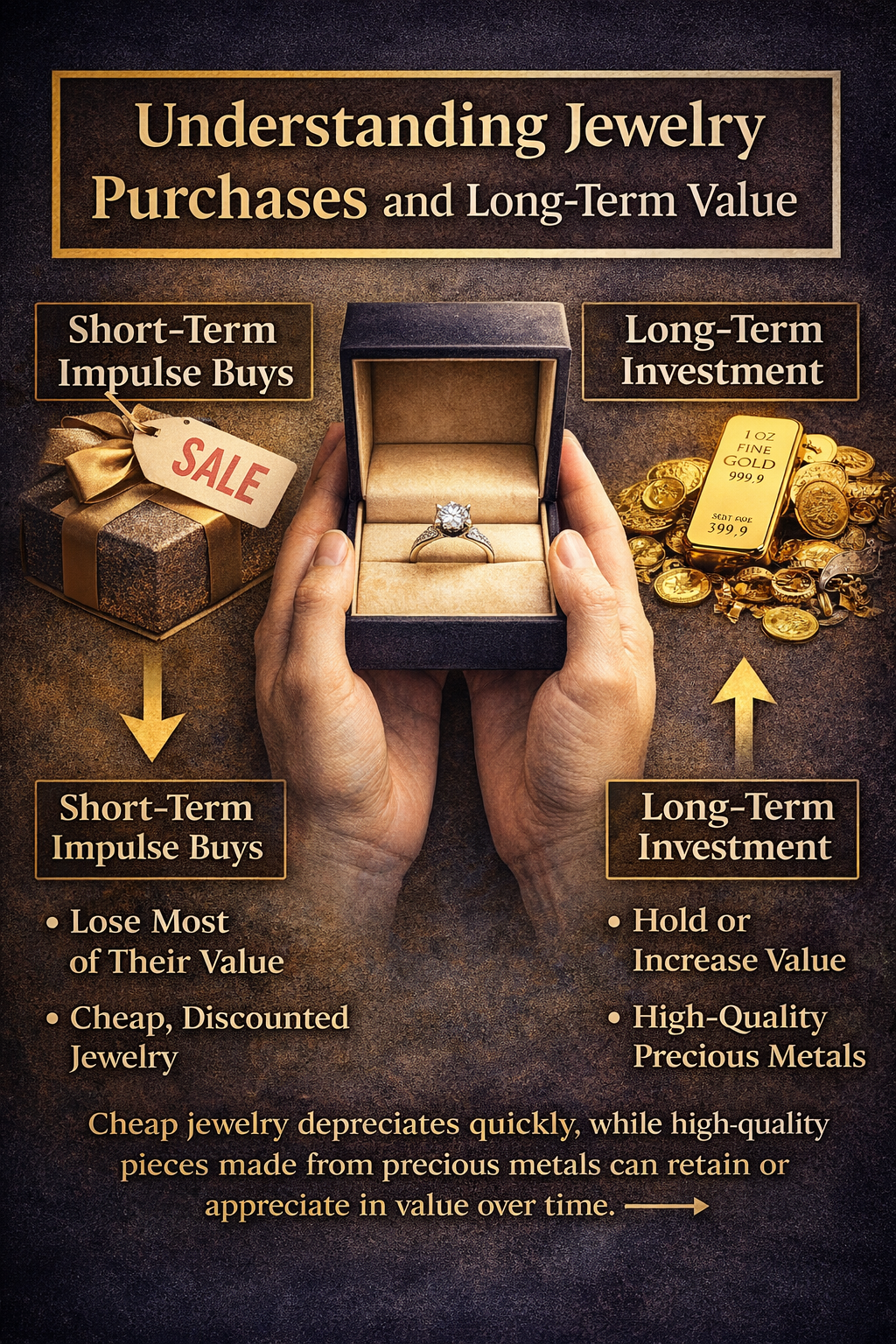
For individuals interested in long-term resale value, it helps to understand which types of items tend to retain value more effectively.
These often include:
Higher-purity gold jewelry
Luxury watch brands with established resale markets
Antique or estate jewelry
Precious-metal bullion or coin jewelry
Fashion jewelry and department-store watches, by contrast, are generally designed for style and accessibility rather than long-term value retention.
That does not make them poor purchases—it simply means they should not be expected to behave like bullion, collectible watches, or estate jewelry in the resale market.
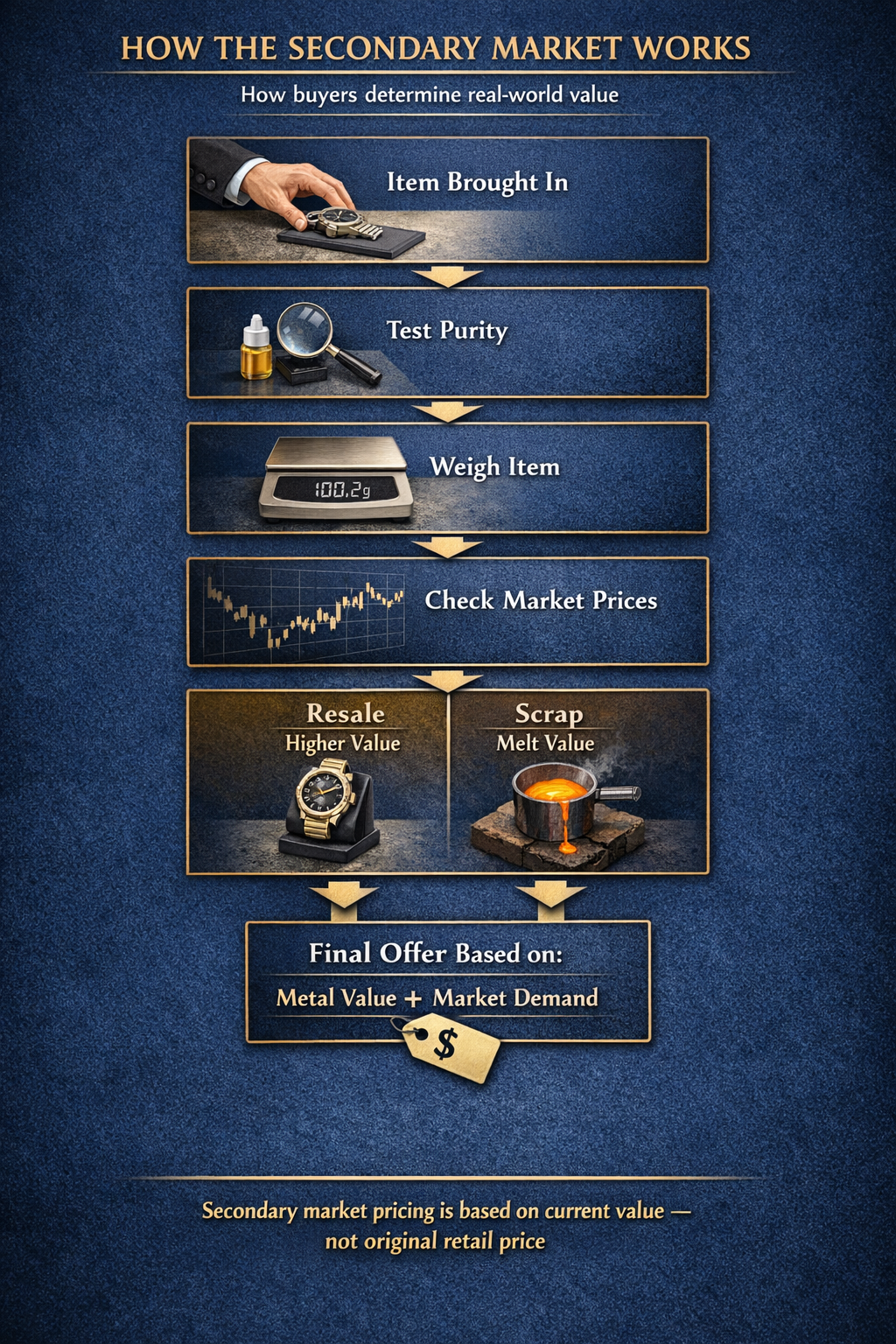
Determining the value of jewelry or scrap metal requires accurate testing and current market knowledge.
At American Rare Coin & Gold, an evaluation typically involves:
Testing metal purity
Accurately weighing the item
Reviewing current commodity prices
Assessing whether the piece has resale demand beyond scrap
This process allows us to explain clearly how value is determined and why retail price, scrap value, and resale value are often very different numbers.
Understanding these distinctions helps customers make informed decisions when buying, selling, or evaluating jewelry and precious metals.