

Olympia:
(360) 489-1804
Sequim:
(360) 477-4507
Olympia:
(360) 489-1804
Sequim:
(360) 477-4507
If you’ve ever checked the silver spot price today and then compared it to a real-world buy or sell quote, you may have noticed the numbers don’t match.
That gap causes a lot of confusion for first-time buyers and sellers. The reason isn’t hidden fees or arbitrary pricing — it comes from the fact that spot price, buy price, and sell price describe different things.
This guide explains what each price means, how they relate to one another, and what you should realistically expect when buying or selling silver.
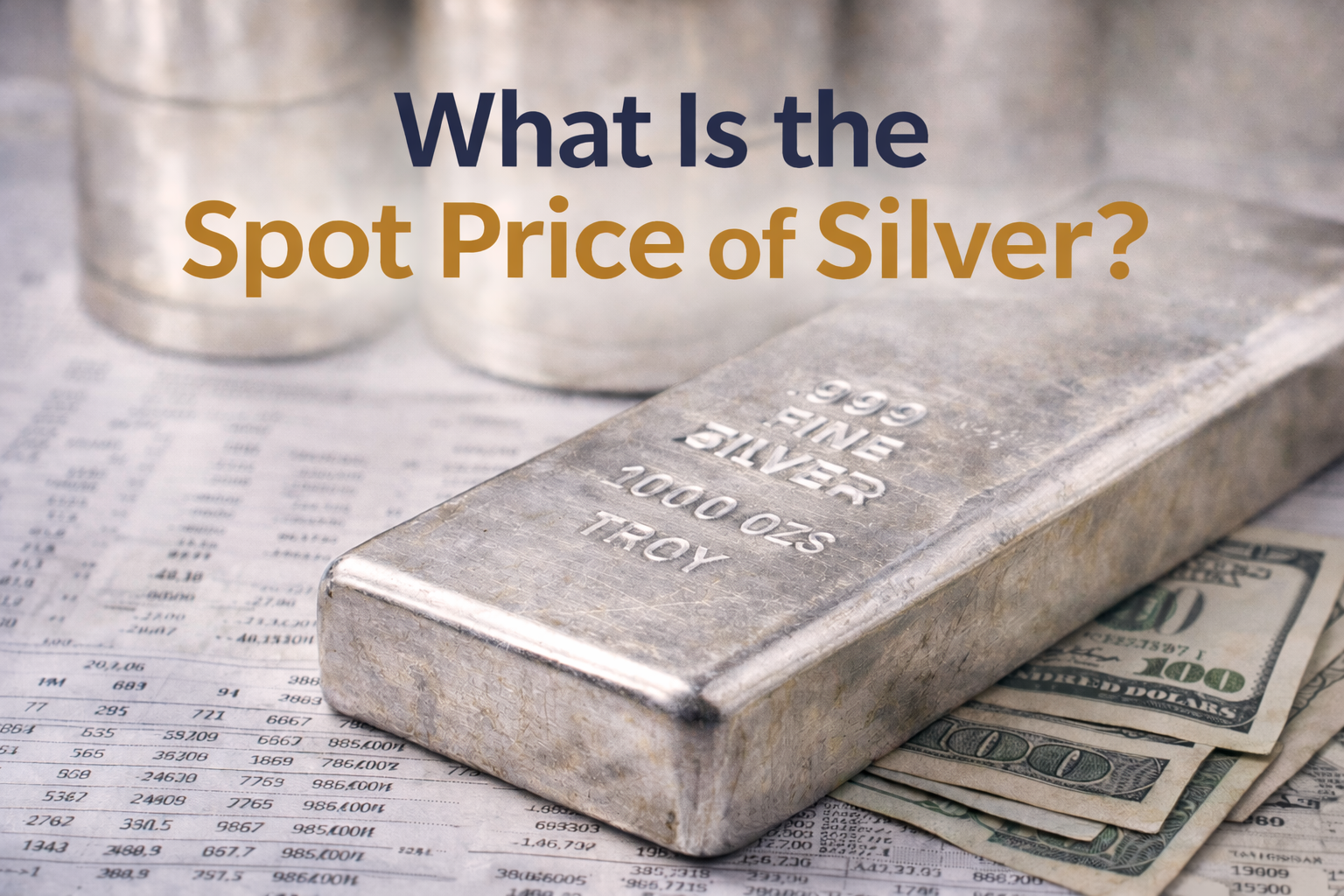
The spot price of silver is the global reference price for raw silver traded at the wholesale level.
It reflects what large market participants are paying for silver that meets standardized purity requirements, usually in very large quantities. The most common form is 1,000-ounce silver bars, which are used in industrial supply chains, refineries, and institutional trading.
The spot price assumes:
verified purity
standardized form
large volume
rapid settlement between counterparties
Because of this, spot price functions as a benchmark, not a retail offer.
When you see phrases like “silver spot price today” or “current silver spot price per ounce,” you’re seeing that wholesale reference value expressed per ounce for comparison purposes.
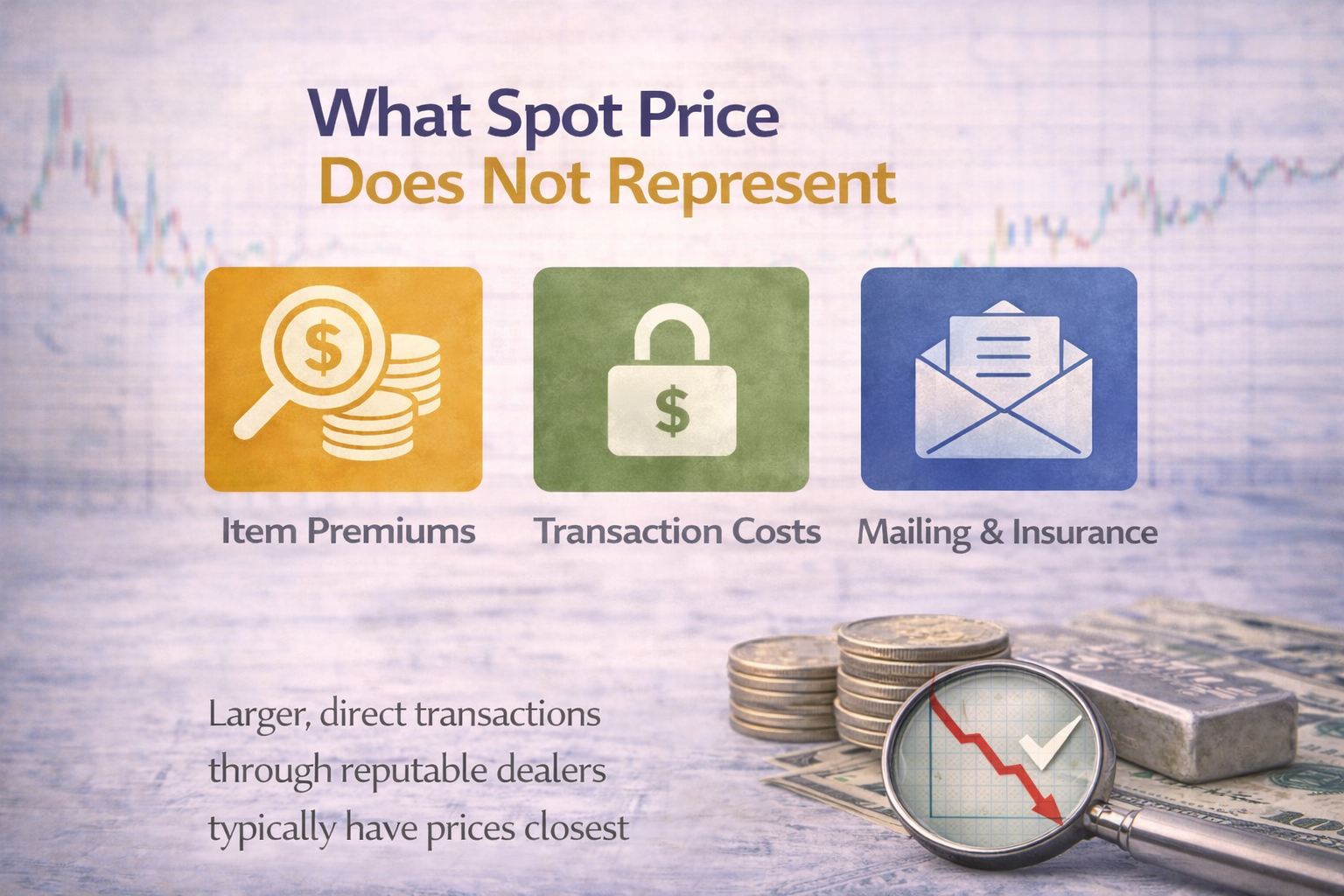
Spot price does not account for the costs required to turn raw silver into something an individual can buy, sell, or handle.
It does not include:
minting or fabrication
packaging
shipping or insurance
verification at the retail level
storage or handling
This distinction is critical. Spot price answers the question:
“What is raw silver worth in large, standardized trades right now?”
It does not answer:
“What will I pay for a physical silver product?”
A common question is:
“Why can’t I buy silver at spot?”
Once silver is turned into a physical product — such as coins, rounds, bars, or jewelry — real costs are introduced.
These typically include:
Fabrication or minting
Refining and purity verification
Shipping and insurance
Dealer overhead (e.g., rent, staffing, security, regulatory compliance)
Market risk while inventory is held
Because of this, the price a buyer sees is always spot price plus a premium.
That premium isn’t arbitrary — it reflects the cost of converting raw silver into a usable product and making it available in the retail market.
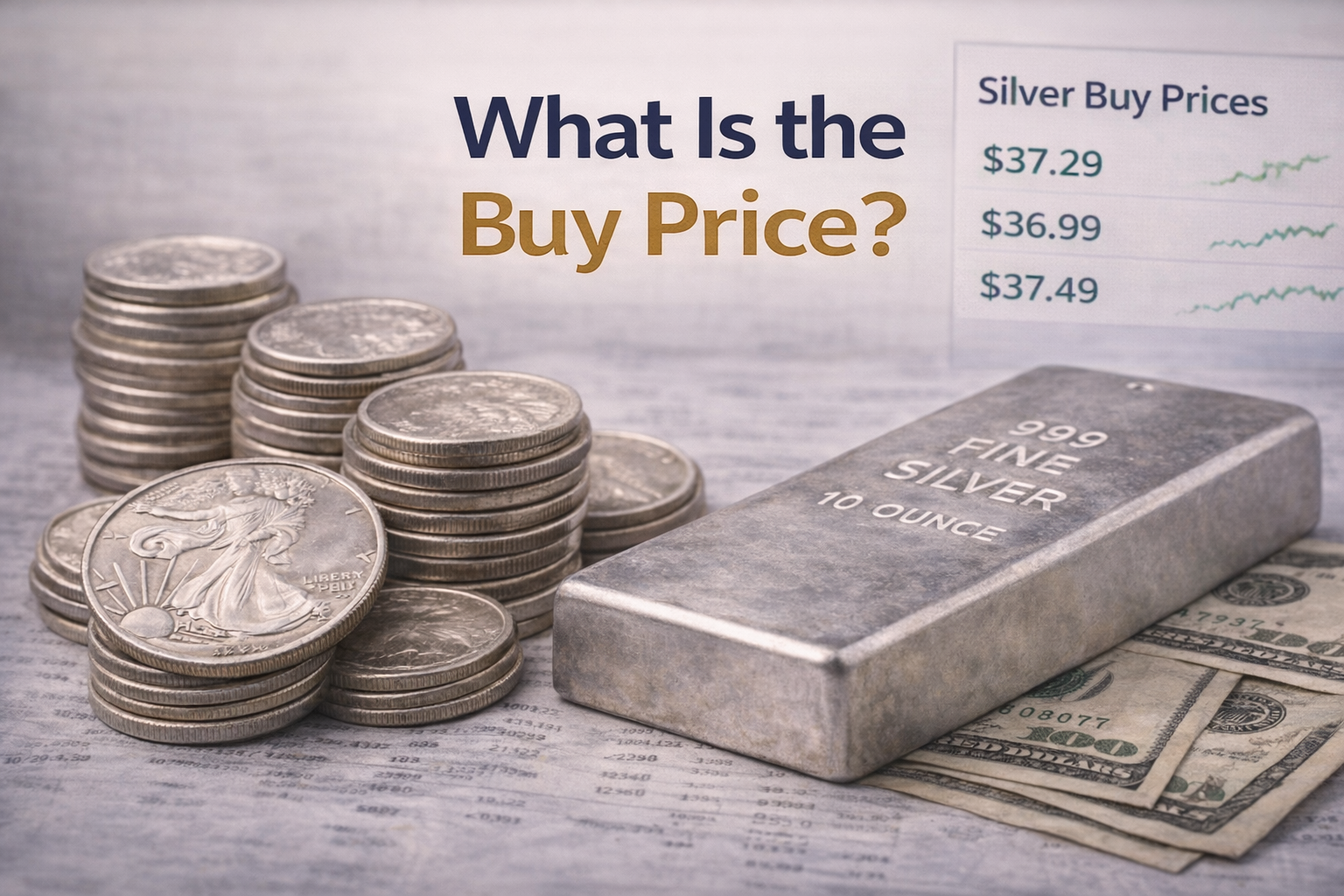
The buy price is what a dealer charges when selling silver to a customer.
It is typically calculated as:
Spot price + premium
Premiums vary based on factors such as:
product type
size and weight
market demand
availability
Smaller products and high-demand items usually carry higher premiums per ounce than large, standardized bullion.
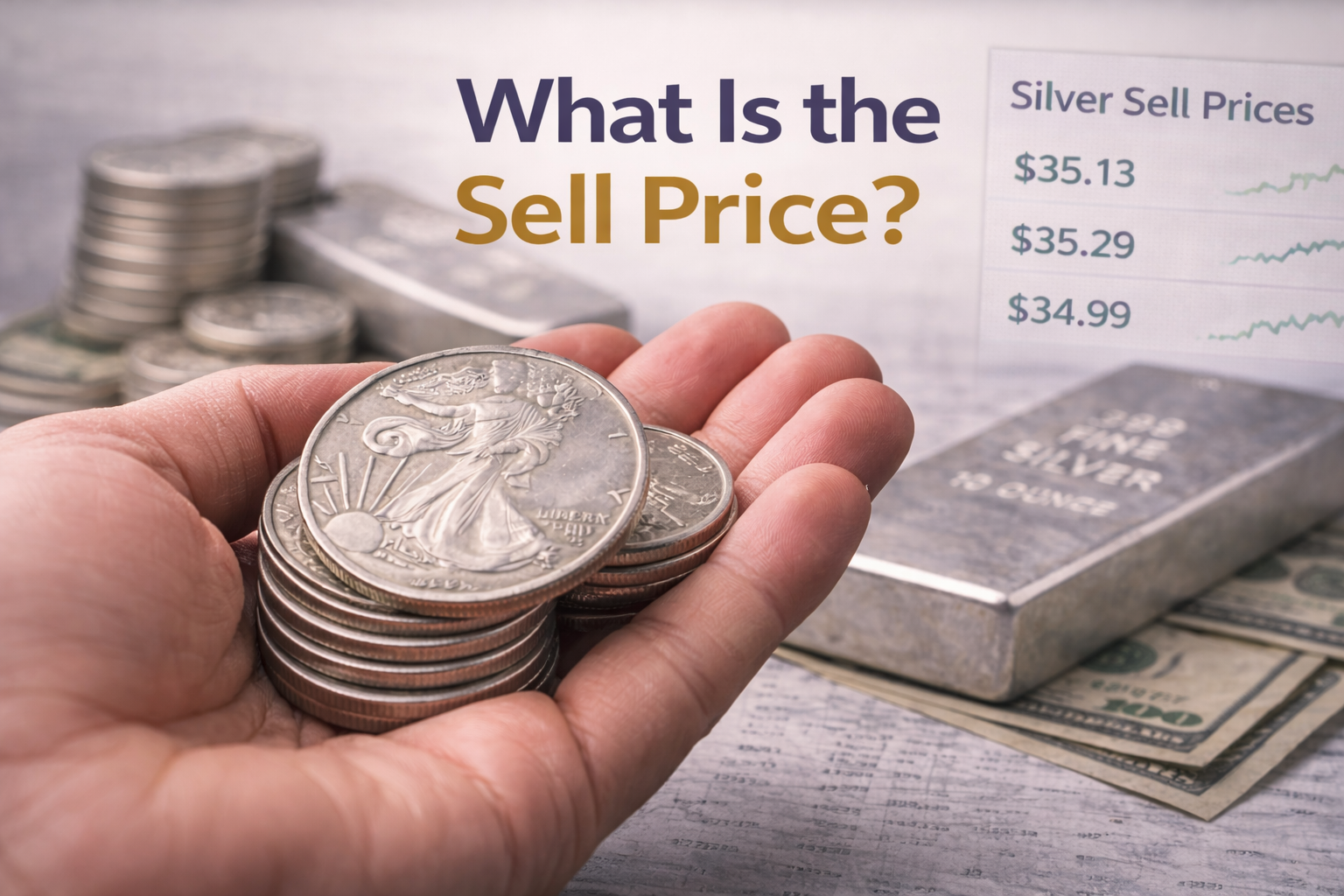
The sell price is what a dealer pays when purchasing silver from the public.
In most cases, it is:
At spot price or below spot price
This price reflects what the dealer can realistically resell the silver for after accounting for verification, handling, and resale risk.
The difference between buy price and sell price is known as the spread.
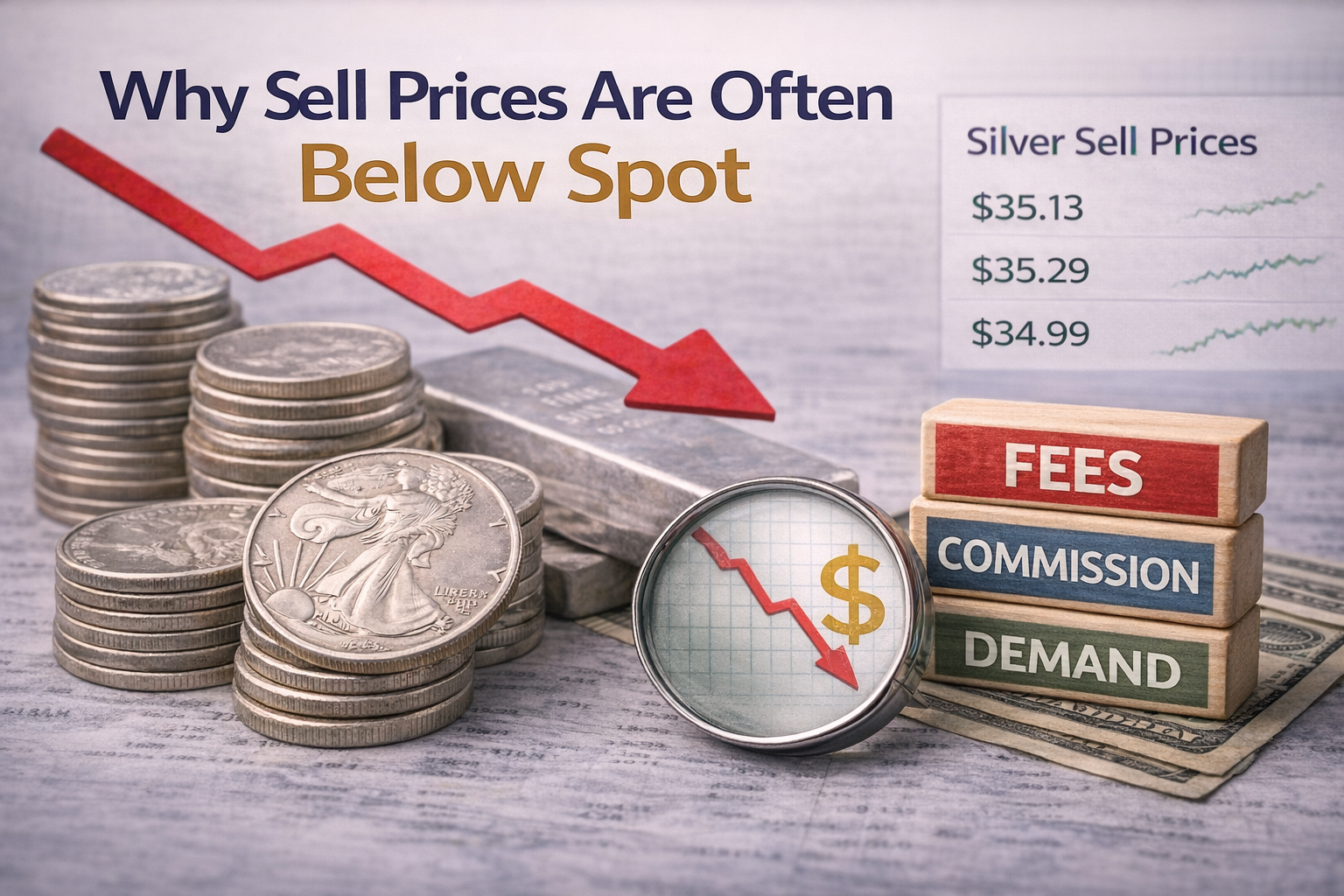
Being offered less than spot price can feel unexpected, especially when spot prices are rising. However, this difference reflects the costs and risks a dealer takes on after acquiring the silver.
These include:
time required to verify purity
refining or resale preparation
potential price movement before resale
capital tied up in inventory
Even when silver is resold quickly, these factors still exist. Paying full spot price on all incoming silver would leave no margin to absorb them.
Not all silver products are priced the same.
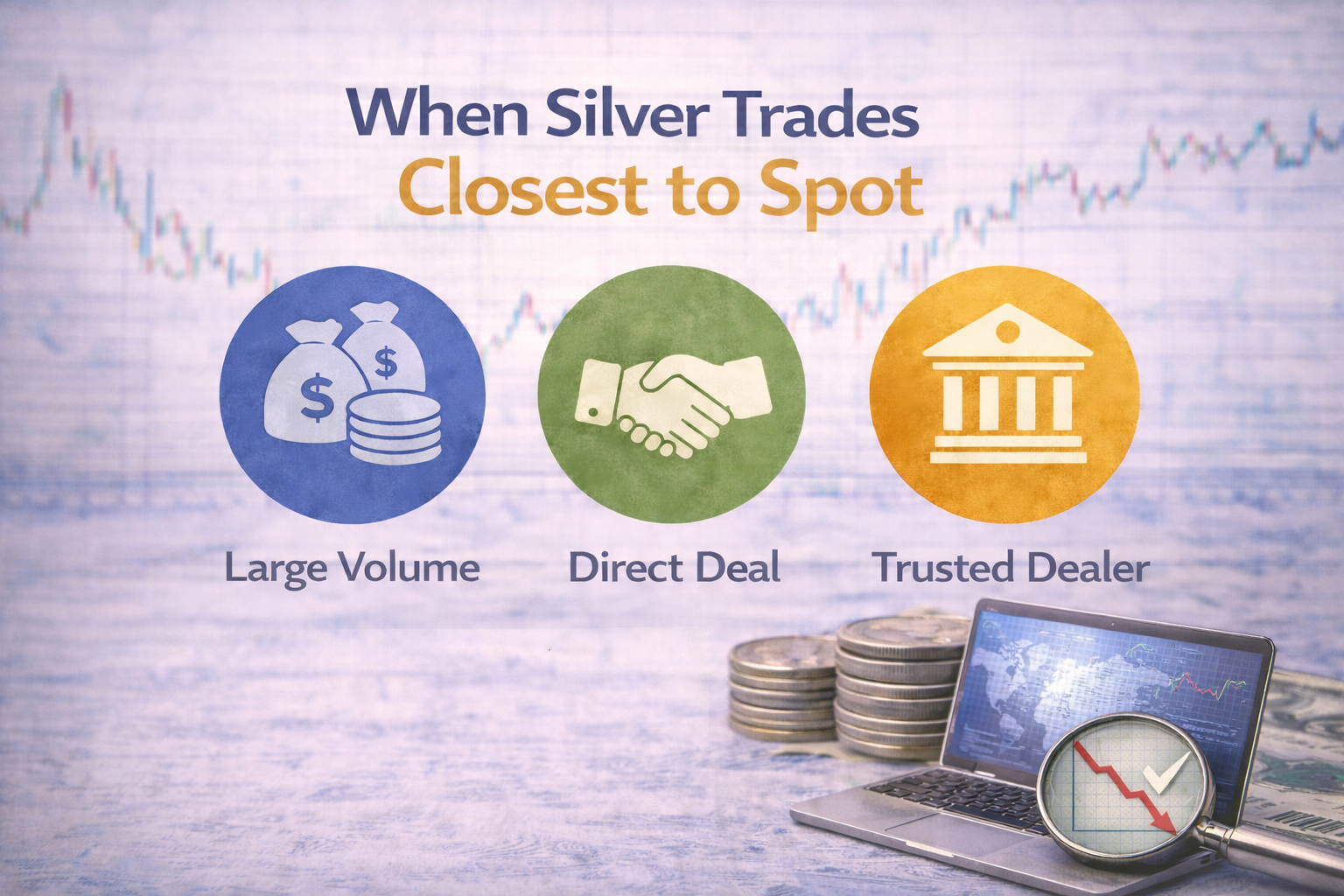
Silver tends to trade closest to spot when:
quantities are large
purity is already verified
resale demand is consistent
Examples include:
large wholesale bars
bulk bullion transactions
standardized products in high-liquidity markets
Smaller retail items usually involve wider spreads because they require more handling per ounce.
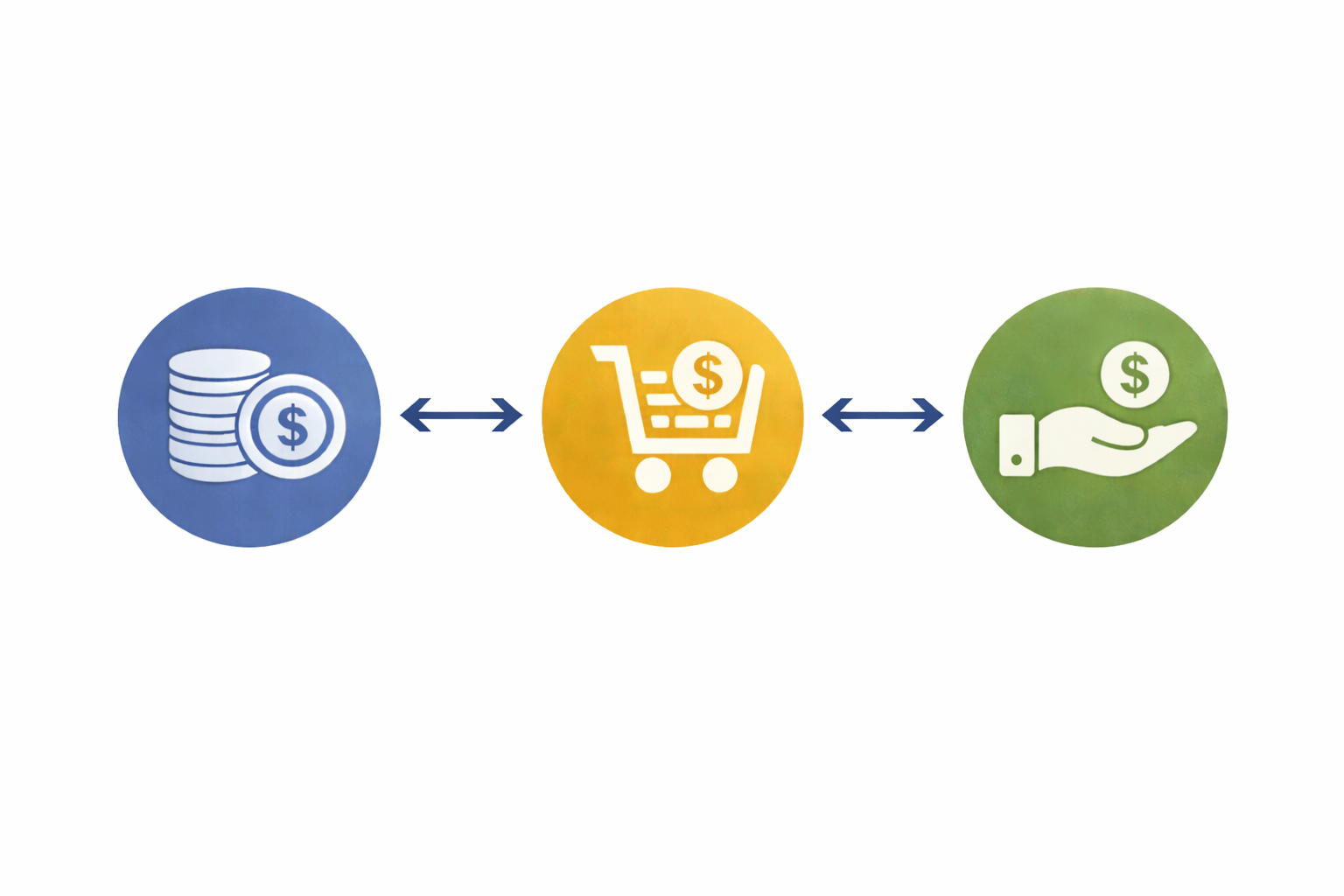
Each price answers a different question:
Spot price — What raw silver is worth at the wholesale level
Buy price — What it costs to purchase a physical silver product
Sell price — What a dealer can pay while managing risk and resale costs
Confusion usually happens when one price is expected to behave like another.
The spot price of silver is a reference point, not a promise.
Understanding the difference between spot price, buy price, and sell price helps set realistic expectations and makes it easier to evaluate pricing fairly.
Once you know what each number represents, silver pricing becomes much easier to interpret — and far less frustrating.