


Olympia:
(360) 489-1804
Sequim:
(360) 477-4507
Olympia:
(360) 489-1804
Sequim:
(360) 477-4507
If you have ever shopped for silver jewelry or silver coins, you have likely encountered both sterling silver and .999 silver. While both are genuine silver, they behave differently and are suited to different uses. Understanding the difference between 925 sterling silver and .999 fine silver can help you make better decisions when buying jewelry, collecting silver, or evaluating pieces you already own.

Sterling silver is an alloy made of 92.5% pure silver and 7.5% other metals, most commonly copper. This composition is why sterling silver is typically stamped “925” or marked as 925 sterling silver.
Pure silver is naturally soft. By adding a small amount of alloy metal, sterling silver becomes stronger and more resistant to bending and wear while retaining the appearance and intrinsic value of silver. This balance of durability and aesthetics is why sterling silver has been widely used for centuries.
Sterling silver is commonly used for:
Sterling silver jewelry
Rings, necklaces, bracelets, and earrings
Flatware and household items
Decorative or commemorative silver pieces
When people refer to “silver jewelry,” they are almost always referring to sterling silver rather than pure silver.
.999 silver, often called fine silver or pure silver, contains 99.9% silver with minimal trace impurities. You may see it labeled as 999 fine silver, 99.9 silver, or pure 999 silver.
Because it contains almost no alloy metals, fine silver has a brighter natural luster and resists tarnish better than sterling silver. Its softness makes it less suitable for intricate or high-stress designs, but it is well suited for simpler jewelry styles, such as smooth bands, pendants, or pieces without stone settings.
Fine silver is also a good option for individuals who are sensitive or allergic to metals commonly found in sterling silver alloys, such as copper or trace nickel. For this reason, some people prefer fine silver jewelry for comfort, even if it requires gentler handling.
Fine silver is commonly found in:
Investment-grade silver coins
Silver bullion bars
Rounds and medals
Silver grains used in refining and manufacturing

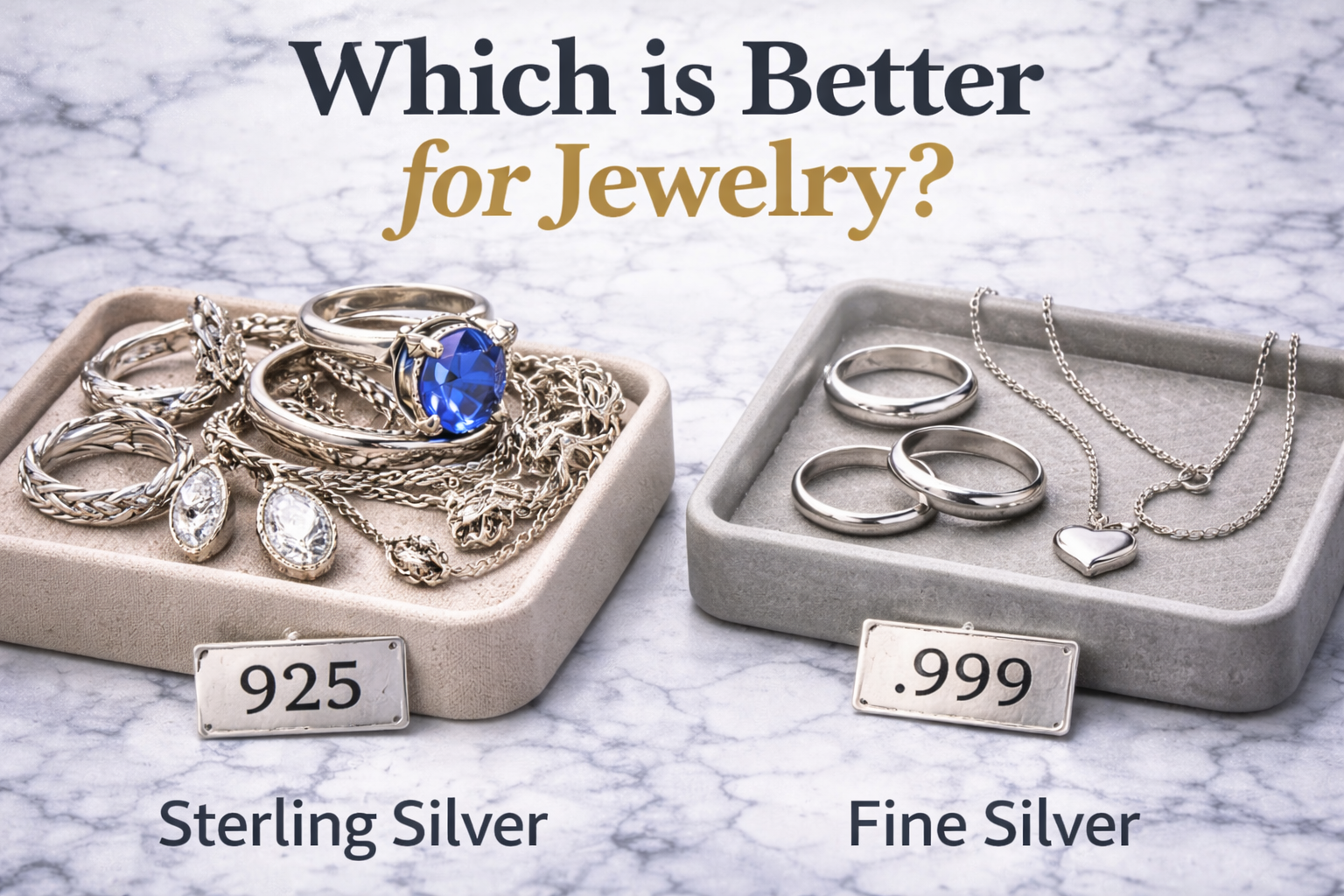
For most everyday jewelry, sterling silver is the more practical choice.
The added strength from the alloy allows sterling silver jewelry to:
Hold its shape
Secure stones and clasps
Withstand daily wear and handling
Fine silver jewelry, on the other hand, is typically used for:
Simpler designs with minimal structural stress
Earrings and pendants
Pieces intended for occasional or gentle wear
Wearers with metal sensitivities
Both types of silver have a place in jewelry making, but they serve different needs depending on durability requirements and wearer preferences.
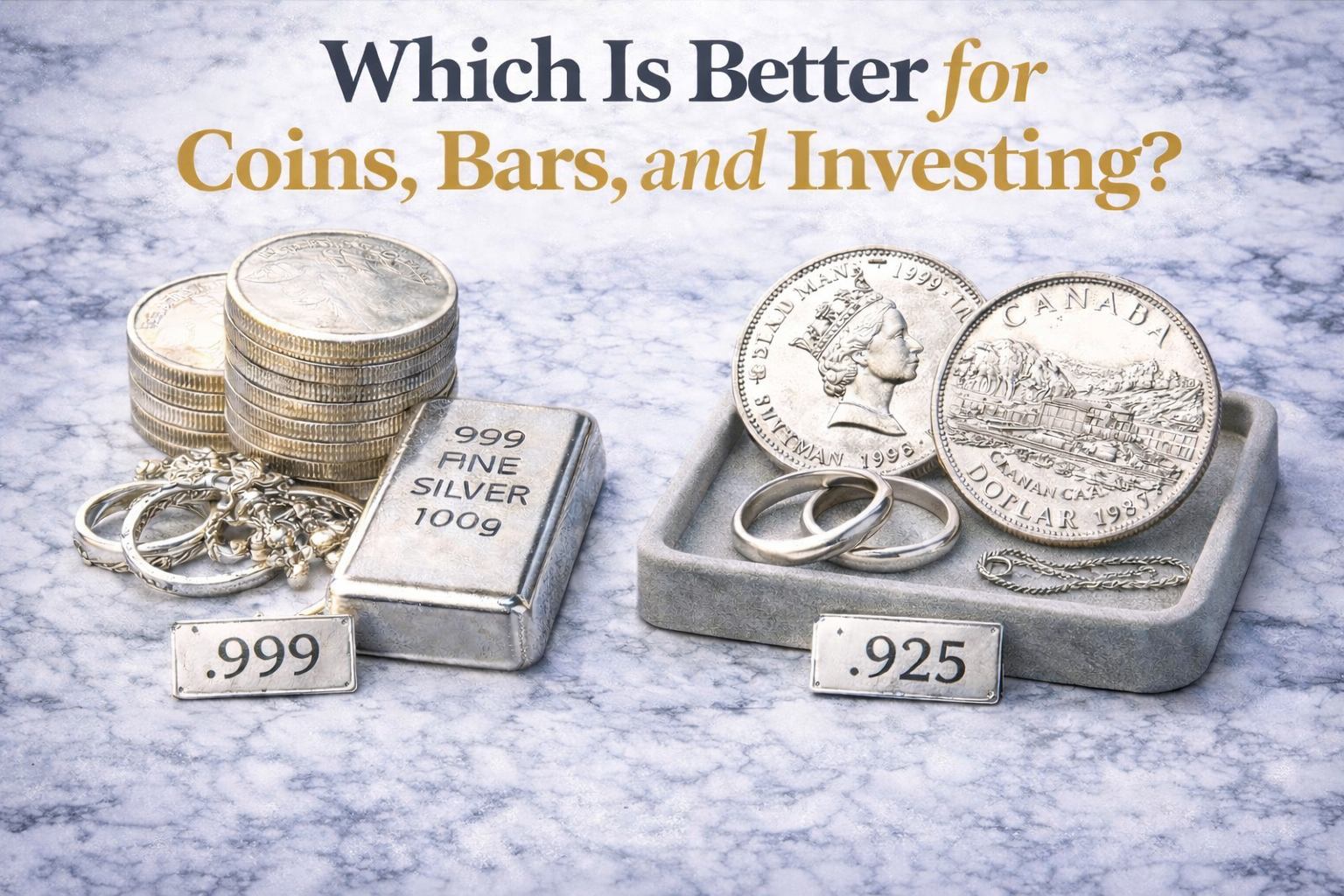
When it comes to silver intended for investment, .999 fine silver is the industry standard.
Bullion coins and bars are almost always made from fine silver because:
The silver content is easy to verify
Pricing closely tracks the market spot price
It is widely recognized and traded
Sterling silver coins do exist, particularly older or commemorative issues, but they are less common in modern bullion markets. Because sterling silver contains only 92.5% silver, its value is calculated differently and often depends on condition, rarity, or collector interest rather than pure metal content alone.
For investors and silver stackers, .999 silver is typically the preferred option.

Sterling silver and fine silver age differently due to their compositions.
Sterling silver tarnishes more readily because the copper in the alloy reacts with air and moisture. Tarnish is a surface reaction and does not reduce the underlying silver content, but it does require periodic cleaning.
Fine silver tarnishes more slowly, but its softness makes it more susceptible to:
Scratches
Dents
Bending
Proper storage and gentle handling help preserve both types of silver over time.
If you are unsure whether a piece is 925 sterling silver or .999 fine silver, there are several reliable ways to determine its composition:
Hallmarks:
Look for stamps such as “925,” “STERLING,” or “.999 FINE.” These markings are the most common and reliable indicators.
Design and construction:
Jewelry with stone settings, clasps, or intricate structures is more likely to be sterling silver. Simpler, solid designs may be fine silver.
Weight and feel:
Fine silver often feels slightly heavier and softer than sterling silver, though this is subtle and not definitive.
Professional testing:
A jeweler or precious metals buyer can confirm silver content using acid testing, electronic testers, or XRF analysis. This is the most accurate method and is recommended for valuable or uncertain items.
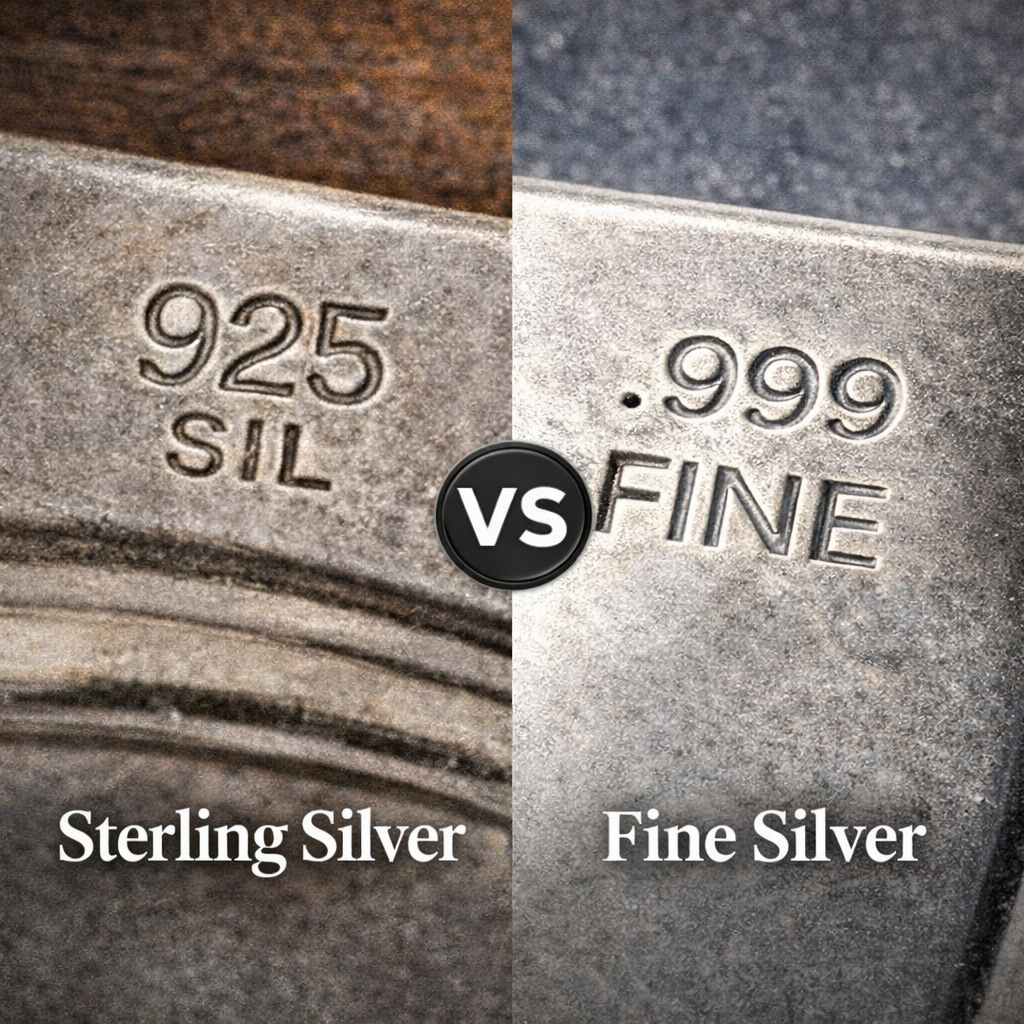

The right choice depends on how you plan to use the silver.
Choose sterling silver if you want:
Durable jewelry for daily wear
Pieces with stones or complex designs
Functional or decorative silver items
Choose .999 silver if you want:
Investment-grade silver
Coins or bars tied closely to spot price
Simpler jewelry designs or allergy-friendly options
Sterling silver and .999 silver are both authentic forms of silver, but they are designed for different purposes. Sterling silver excels in durability and everyday usability, while .999 fine silver offers purity, brightness, and suitability for bullion and sensitive wearers.
Understanding these differences makes it easier to choose the right silver for your needs and to accurately identify what you already own.